Poker is a funny game, and by funny, I mean it's swingy.
I started out this month on a +$5000 run, then went down to -$2,000, turned that around and worked it up to +$6,500, and now I lost that and am back to even.
I've never dealt with dollar figures this high, but I don't think I'm handling the swings any better or worse than I normally do. That is to say, I get easily frustrated and go on tilt, but I'm not going to start playing like an idiot. Fortunately, I'm pretty good about quitting if I start to tilt.
I don't want to write too much because the ups and downs are such a large part of the game. I know this. But even after playing for a few years now, variance and luck continue to be difficult to grasp on an emotional level. I'm sure that reflects some immaturity on my part, but I do my best to be rational about it.
I keep thinking about the idea that the caliber of player you are is determined by how well you play when you're not winning. It's easy to go all in with the best hand and win a lot of money if someone else calls; it's a lot more difficult to fold a set to a flush on the river or lay down a flopped straight to a flopped flush.
Experts say you should always bring your best game if you're going to sit at the tables. This is hard to do when I feel good but my reads are off, or when I think I'm playing well but I lack confidence because of recent losses.
So I think the smart thing to do is to stabilize my surroundings. If I play in games where I feel the most comfortable and have a greater edge, I'll have a better chance of winning (duh). That means I'll call off my first attempts at 10/20 NL until I grow my bankroll to higher levels. I'll concentrate on my strength, which is no limit games. I'll play shorter sessions in hopes of staying fresh. I'll quit when I'm ahead. I'll return to my tradition of sleeping easy and waiting until the morning to check on my results.
Basically, I'm not going to push quite so hard.
Maybe this is superstition, but I believe there's a time for pressing your luck and a time for regrouping. I don't know how to tell the difference except by "instinct" and "feel."
Monday, January 29, 2007


Wednesday, January 24, 2007
Roshambo Review: Throwing Scissors
If you want your opponent to believe that you have the poker hand you're representing, your betting needs to be consistent whether you actually have it or not.
The classic example is when you hold the Hammer (72!) and choose to play it as if you were holding Aces. If you bet your hand the same way as when you really do have Aces, for all your opponent knows you do have it. By betting strongly and consistently, you create a reality in which 72 is the strongest hand in poker!
But the only way for this reality to exist in the mind of your opponent is if he believes it exists. And for that to happen, you can't get too fancy. You need to paint a picture that makes it obvious you have the best hand. The way to do that is by betting in a uniform manner regardless of your hand.
A nonsensical check-raise bluff on the turn will get you in trouble if there's no real hand you could be making that move with. A big overbet on an AA2 flop will do little to represent AA, especially if your opponent holds AK.
To draw a comparison to Roshambo, you need to throw scissors with your betting nearly every time, both when you're bluffing and when you have the goods.
If you suddenly bring out a minraise (paper) when you hold the nuts, your opponent is going to get suspicious because you don't usually minraise otherwise. If you usually check-raise with top pair out of position but check-call a flush draw (rock), no one is going to be fooled when the flush card hits and you come out betting.
One of the best ways to bust an opponent is by deceiving him, and that can be accomplished by throwing scissors. Frequently, this is done by following up. If you raised preflop, often throw out a continuation bet on the flop. If you tend to raise your overpairs in position, consider doing the same thing when you have a big draw.
You'll never make much money if you only bet when you have it and fold when you don't.
Many times, your opponent will simply lay down his hand to your aggressive betting. But sometimes, he will get annoyed with your constant bets and raises and he might decided to play back at you.
This is the time when you will get paid off. While your opponent hit his top pair, top kicker on an Ac 8d 6c, he'll have no way of knowing that you were open-raising from the cutoff with Kc 8c. Or maybe you'll have a set of 6s, but your opponent won't be able to read that hand because you raised rather than limped.
Deception is only effective if you can tell a believable story. Eventually, your opponent will decide to take a stand because your repetitious story strains credibility. That's when you'll be glad you threw scissors all those other times, because this time you'll hold the nuts.
Scissors will cut your opponents up!
Tuesday, January 23, 2007
Chasing
My head hit the pillow around 1 a.m. early Sunday morning. Finally, sweet oblivious rest.
Earlier, I had woken up optimistic about a productive day of poker, cleaning, shopping, biking, caffeine, alcohol and warm January sun. I did it right -- I drank some yerba mate, cleaned up the apartment in the morning and got ready to run some errands.
My week had been tiring and frustrating. My poker play was lackluster, Neteller's withdrawal from the U.S. market got me down, I couldn't get a date with this girl I liked and my bike had been stolen. Fortunately, I immediately bought a new bike, and that would be my means of transportation for the summer-like Honolulu Saturday.
After buying a bike seat lock, grabbing fast food for lunch, spilling my drink all over the place and going grocery shopping, I was prepared to log in and win some money. I decided to sit at a couple of 10/20 NL tables. After all, the games won't stay this good for long, I have the bankroll and I was feeling good.
First on Full Tilt, while I was scoping out the games, I found a nice and loose 5/10 NL game. It didn't take long for me to lose my first buy-in. Bad beat story short, I flopped a set of 9s and then got busted by a player on the button who turned a straight off 53s. Wunderbar.
Then I clocked into PokerStars and sat at a 10/20 game. This time, I flopped a set of 3s, bet it out on the flop and turn and lost to a turned overboat. Brilliant. I tilted off the remaining $250 in my stack and signed out.
How embarrassing! That hand reduced my PokerStars balance to $170 with no way to redeposit. I was down $3,000 that I had lost in two hands and a few minutes. The rest of my bankroll is tied up in other sites, but I hate it that my Stars account shrunk to such low levels.
After those beats, I figured I was done with poker for the day. It would be foolish to risk further damage by chasing losses. Not playing was the most +EV decision. So I biked to the mall, bought some new work shoes on sale, watched TV, cooked my crazy pasta and then biked to a bar in China Town to get some drinks.
Unfortunately, I had forgotten to bring my new, bulky bike lock with me. I was used to my lock being attached to my old bike, but I haven't figured out how to hook up the new one. I had no choice but to ride my bike back home. By the time I got back, I decided to forget about the whole bike-riding idea and just drive instead. I'd pay for parking. Whatever.
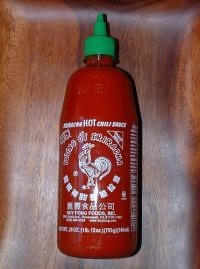
A word about my crazy pasta: it's delicious, but there's no way I could talk to women after eating it. I mixed in bow tie pasta, shredded garlic, garlic pepper, onions, green peppers, spicy sriracha sauce, mushrooms, mozzarella cheese and olive oil. This stuff is very strong, and it will leave you with horrible breath no matter how much mouthwash you use. I love it.
I had a couple of drinks, tried not to offend anyone with my dragon breath and got home safely. I turned out the lights and flopped down on my mattress, ready for the day to be over.
But then, as I was lying there face-down, I realized I wasn't ready for the day to be over. I was wide awake! And not only was I alert, I was thinking clearly and felt motivated. "Fuck this," I thought. "I'm going to log on to Bodog right now and get my money back!"
So that's what I did.
Over the next hour and a half, I found some nice and terrible players populating all the 10/20 games. I doubled up once when I got all in on a 884 flop with KK vs. TT. A few hands later, I lost most of a buyin with a flopped set of 7s vs. a turned set of Kings.
Eventually, I got up to a little over $1,500, and I could almost taste it. One more double up now and I'd have made up for my earlier losses. But if I lost $2,000 at this point, I'd be worse off than when I started.
I was dealt AQs and called a late position raise from the small blind. The flop came down AQ2. Woot! I had top two pair! There was only one problem -- all three of those cards were hearts, and I only held diamonds.
I checked. My opponent bet $70 into the $140 pot, and I check-raised him to $400. He called. The turn brought a meaningless 7 of spades.
I made my decision. I was going for it -- All-in for $1,526. My victim thought for a second and then called with AJ, and he had the Jack of hearts. I held my breath for the river, which was a beautiful 5 of diamonds. He missed his flush, and I had doubled through!
I immediately logged off, self-satisfied with my $600 profit for the day. That's a lot better than a $3K loss.
This time, when I got into bed and pulled up the blanket, I think I was out within five minutes. Maybe my crazy pasta is good luck.
Sunday, January 21, 2007
It isn't over till I say it's over
"If you’re going to call on the river, you might as well raise on the turn—this is a fundamental concept in pot-limit and no-limit poker."
--Lyle Berman, "Super System 2"
OK, so online poker as we know it is going down the tubes. What's next?
I've been trying to look for the silver lining in this mess the U.S. government has gotten us into, and there are a few positives.
One short-term outcome is that many players' money is temporarily stuck in their respective sites while they try to find new withdrawal methods. This means that a lot of their money is in play right now, in the few weeks before the games go to crap.
I've seen plenty of bad players burning through their cash the last couple of days. After all, what's a gambler who can't withdraw his money going to do? He's going to play with it. And I'm going to concentrate over the next few weeks of grabbing as much of that dead money as I can.
Another plus is that it seems like many players have this feeling that playing poker is pointless because it may all be over soon. I felt this way for a little while too, but now I think this mind-set can lead to sloppy play. I hope to target some opponents who have given up hope.
In the long run, it's possible that these hurdles to online poker will turn out for the best: that only after going through these hard times will people seriously work to pass a poker exemption into law, and that could lead to a second boom. I admit it seems unlikely that poker will get an exemption to the UIGEA anytime soon, but can you imagine how great the games would be if that did happen?
These obstacles are also a chance to diversify your games. If you only know hold 'em, you really need to branch out to other brands of poker that may not dry up as quickly. I'm trying to learn pot limit Omaha and triple draw, in part because there aren't too many good players in these games. I've found them to be profitable so far.
Finally, while I know it's wishful thinking to believe a new Neteller-type payment processor will suddenly rise up, there are still possibilities for new deposit methods to emerge. I don't know what will become the dominant way to get money in and out of poker sites, but there are a few options being discussed on blogs and forums -- things like phone card deposits, paper checks through the mail, USPPInc or offshore banks backed by the poker sites themselves. None appear promising, but we'll see.
Don't despair! Even if everything does suck, now is the time for constructive ideas. If nothing else, play poker now while you still can. Who knows what might come next. We may soon hear that PokerStars or Full Tilt are pulling out of the U.S. as well.
---
I posted a little while ago about the Dogwatch Handgrabber, which allows you to datamine and display Bodog stats with Pokertracker. This program is awesome, but I found it to be a little bit buggy. Almost every time, it eventually caused my Bodog client to crash, forcing me to miss hands while I reloaded the software.
Fortunately, a work-in-progress solution was found a few weeks ago. Apparently, the crashes only occurred on dual processor computer systems because of some kind of hyperthreading error. The fix to this problem is to tell Dogwatch through Task Manager to only use one of your system's two processors. Here's the forum post with more detailed information and instructions.
Thursday, January 18, 2007
PLO
After feeling a little off my hold 'em game the last couple of days, I've decided to take up pot limit Omaha Hi. So far, over a small sample size, my BB/100 hands is in the dozens!
I don't know much about PLO, but I'm operating under a few assumptions to guide me through the learning curve. So far, they've served me pretty well.
1) Play tight preflop. I think this may be the No. 1 rule for most forms of poker.
2) PLO is a game of the nut, so don't go to war without the nuts or a draw to them. I played a heads-up PLO game with a friend over Christmas break in which he flopped top set against my flush and wrap-around straight draw (I think that's what it's called). I can't remember the exact hand anymore, but I ran it through twodimes just to be sure. It confirmed what I thought -- I was a favorite on the flop when the money went in. So I try to remember to get some money in on the flop with the nuts at the time, but I'll hesitate to commit all my money unless I still hold the nuts on the turn.
3) Obey the fundamental principles found in most forms of poker -- vary your starting hand selection based on position, try to reason through hands, smell out bluffs, bet and raise more in position, and fold when you think you're beaten.
4) With a hand like AAxx, if I can get more than half of my stack in preflop, I'm going to go ahead and push all in on the flop in most situations. Otherwise, slow down with AAxx.
I know this is very basic information, but that's about all I've got so far.
This game really rules. Most tables seem playable, filled with people who know even less about PLO than I do. A strategy of playing tight and waiting for the nuts seems to work pretty damn well, especially when you run into opponents who are only too happy to bluff off all their money on the river.
I've always said that I wanted to branch out into new games, but change is hard. Finally, with efforts to learn triple draw and PLO, I feel like I've taken the first steps. My fear was that I wouldn't be as profitable in these other games as I was in hold em, but I think I should be able to beat them for the same winrate within a short amount of time. It's worth it so far.
Many of the players in these games are just giving money away, and now is the time to branch out into other forms of poker. You'll need all the skills you can muster if you want your bankroll to get through the coming tightening of the online poker world.
Wednesday, January 17, 2007
Crap
UPDATE: It's done. Neteller has stopped allowing U.S. customers to transfer money to gambling sites, effective immediately.
I'm not going to rant about the idiocy of federal government regulation of the Internet gambling industry, so instead I'll make a few brief points and throw up some links.
Following the arrests of two of Neteller's founders, it is believed that the payment processor will soon close its business to U.S. customers. Neteller is the leading method of funding poker accounts, and its withdrawal from the U.S. market will decrease the enjoyment of playing online and lead to less profitable games.
For the record:
_ The Unlawful Internet Gambling Enforcement Act does not make playing poker online illegal.
_ The Wire Act does not apply to Internet poker.
_ The recent arrests relating to Neteller and other sports betting sites are not based on the UIGEA -- charges include money laundering and intent to promote illegal gambling.
_ Sites like Party Poker (and presumably Neteller) are withdrawing from the U.S. market in response to fears that their executives will face prosecution. By targeting the businessmen who run or founded these companies, the U.S. Justice Department is successfully intimidating them into making policy changes.
_ The World Trade Organization's case against the United States, led by Antigua, is still pending. It's possible that WTO sanctions against the U.S. could lead to changes in gambling laws.
Links:
What the Neteller Busts Mean
Online Poker in the US Takes Another Shot to the Kidneys
Neteller Founders Charged with Money Laundering Conspiracy
Neteller Founders Detained: New UIGEA Precedent or Old School?
Does luck exist? (pt. 2)
Objectively, there's no doubt that under fair conditions with a random shuffle, each hand is an individual event. Cards have no memory. The last hand is ancient history that has no bearing on the cards that hit the board this hand. Just because you won the last hand doesn't mean you should play your rush, because there's no such thing as a rush except in retrospect.
Cards show no favoritism and obey no master. Two bad beats in a row doesn't make the game rigged. Streaks happen, but their beginning and end can only be observed after they're over.
Luck is an illusion created to explain variance, that element of chance that sometimes causes good players to lose and donkeys to prosper. Over the long run, there is no such thing as luck. Over millions of hands, the best players will win the most money and the worst players will go bust.
I don't see any valid argument against the above statements.
Larry W. Phillips, the author of "Zen and the Art of Poker" suggests that when your luck is running cold, you should take lower risk decisions. When your luck is running hot, you should play more hands in hopes of taking advantage of your good streak, he says.
I believe those suggestions are nonsense, as a couple of commenters pointed out. Making the correct decision and maximizing your EV is almost always the right choice, even if you believe you have some kind of psychic knowledge that a bad beat will smack you on the river.
However...
I also don't think parts of Phillips' advice are completely without merit.
While a poker player should always strive to make the correct move based on his read of the situation, the trend of a table can build on itself, creating an illusion of luck.
For example, if a player tightens up and plays passively after suffering a beat, he may give an opponent free cards by calling rather than raising. If opponents at a table see that a player was bluffed once, they'll be more likely to attempt aggressive bluffs again. If you show that you'll only raise the nuts, your opponents will quickly learn to back down when you raise. If you always raise in position, your opponents will know that your hand range is wider than normal and play accordingly.
Unless you suspect what your opponents know and can empathize with their motives, you might think that your bad luck is accumulating. In fact, luck has nothing to do with it. In these situations, opponents are attempting to exploit your weaknesses.
It does get difficult, though, when you don't understand what is happening. When your opponent detects a flaw in your game that you aren't aware of, it may appear that you are suffering bad luck because you can't find an explanation for what's happening.
As the beats build up, tilt becomes more likely. Once you're on tilt, you can't blame luck anymore because you're beating yourself.
This is when some of Phillips' ideas could be applied logically.
If you're losing, play shorter sessions. Perhaps you're up against tougher competition than you initially believed. Maybe you're distracted. Maybe the table dynamics don't favor your style of play.
If you're winning, play longer sessions. You're likely playing well and confident that you will continue to triumph. As long as you're in the correct mind-set while also making the right decisions, there's a good chance your wins will accumulate.
It may help some players to think of whether and how they should play in terms of luck. But a stronger, more constructive line of reasoning -- as well as an acceptance of factors that may be beyond your control -- allows you to put yourself in better situations.
Tuesday, January 16, 2007
Does luck exist?
"In my experience, there's no such thing as luck."
-- Obi-Wan Kenobi
___
"Luck in any card game is cyclical -- it comes and goes in a mysterious fashion. Sometimes the cards run hot, sometimes cold. Many players give no weight to this at all as a factor in the game. But if such events are cyclical, perhaps we ought to take a hard look at this as a factor in the game. It must be of some significance that in some games no matter how well we play nothing works, while in others it hardly matters what we do because we can't do anything wrong. It is unlikely that an effect of such magnitude would have no meaning within our own purposes in the game.
Since poker involves so many borderline decisions, often occurring one after another, it doesn't hurt to ask yourself from time to time (when trying to make up your mind about which way to go in a hand): 'How is my luck running?' Asking yourself this can be helpful in maximizing your good days and minimizing your bad days.
As noted, some players ignore this completely. They play each hand independently, regardless of how their luck is running. You see these players betting along nonchalantly, playing each hand by the book, despite being down a lot of money. They have not retreated despite the negative flow of events.
It can't hurt to monitor one's luck and the general trend of it: how hot or cold you are is a legitimate factor in the decision-making process. This is not just a question of academic interest. It has a direct bearing on your fortunes. Use this tool to answer some of the borderline decisions you make in the game.
If your cards are below average, but you've been winning with anything and everything, you might want to play more hands. Conversely, if you've been getting fairly good hands, but you've lost with all of them, you might want to fold some of these."
--"Zen and the Art of Poker," by Larry W. Phillips
Monday, January 15, 2007
OT: A guide to watching "24"
"24" is a fun show, but just about every new season contains repetitive elements from previous episodes.
Here are some plot devices you can be pretty sure to see, whether you're starting to watch the show from the beginning or just picking it up now, at the start of the sixth season. Spoiler warning: this list reveals a lot about the show.
_ When someone says, "We're bringing you to CTU, it's safe there," you can be pretty sure that it's anything but safe there. How times has CTU been the site of murders, explosions and contaminations? A lot of times.
_ There's a mole inside CTU. Maybe more than one. Who is it this season?
_ Jack will get arrested.
_ Jack will make phone calls to the president.
_ Jack will get captured and escape.
_ The president will pardon a terrorist in exchange for his cooperation.
_ There will be a countdown, and Jack will barely beat the ticking clock.
_ The terrorists will use nuclear and biological weapons.
_ The terrorists will take hostages.
_ There will be a car chase.
_ Jack's love interest will either be killed or held hostage.
_ Torture will be used as a first resort ("We have no time!!!")
_ Jack's past will come back to haunt him.
_ Most all of Jack's friends will end up dead.
_ Chloe will disobey orders to help Jack.
---
Predictions:
_ Eventually, an umbrella terrorist organization will mess with Jack personally to get revenge. This organization will have something to do with his Season 1 connections to the Balkans and Nina Myers. These terrorists will have a link to Operation Nightfall.
_ The hand virus given to the President Arnold Palmer at the end of Season 2 will never be adequately explained.
---
Only two characters from Season 1 have not been killed off and have appeared in every season. They are:
_ Jack Bauer
_ Aaron Pierce
The body count will be high.
Friday, January 12, 2007
These are not the LAGs you're looking for
I got a question asking how successful I have been in integrating the Cardrunners offense into my game. Specifically, was I able to transition from tight-aggressive play to loose-aggressive in shorthanded games?
The easy answer is, "not really."
I've tried to loosen up, especially in position, but I find that it's very difficult (read: unprofitable) when I try to play the role of the LAGgy pro. I know it works for Taylor Caby, but I'm not there yet.
That said, adapting the mentality of LAG play has absolutely helped my play, even if it doesn't necessarily work out in reality. I place more importance than ever on playing from position, and I try more steals from late position. While tightening up a lot from the blinds, I feel pretty comfortable raising with a wide range of hands when I have the positional edge.
Let's look at some stats. These are my Full Tilt numbers in shorthanded games only:
October:
VP$IP: 22
PFR: 13
WSD: 17
W$SD: 59
November:
VP$IP: 23
PFR: 15
WSD: 17
W$SD: 55
December:
VP$IP: 23
PFR: 12
WSD: 18
W$SD: 52
I don't know if much insight can be gleaned from those numbers. They're still fairly tight -- by comparison, my full ring VP$IP during those three months was 19.
I can think of a couple of conclusions:
1) I'm still a tight-ass, but it doesn't really matter. These are just numbers, and they don't really describe my postflop play, which is more important anyway. A couple of months ago, I posted about how I was worried that the blinds were killing me. In retrospect, I believe I was wrong. The blinds always and forever will suck money from my stack, but they'll never cause me to go bust. Loose calls out of position are a much more severe evil.
2) I call too much on the river (see November and December W$SD). I'm not sure what the ideal winning percentage at showdown is, but my results seem to reflect that I make more money when I call slightly less. Interestingly, my losses over the last three days seem to be in part caused by shoddy river play: 20 percent WSD and 45 percent W$SD.
You don't have to be this great LAG player in 6-max games who can make ungodly reads and bluff people off their Aces at will. I aim for a looser game, but tight play still works well.
Thanks to easyE for the comment.
Thursday, January 11, 2007
I play so bad
I don't know what's wrong with my game exactly, but it's gone to shit over the last few days.
I've been calling river bets too often and seeing every turn as a scare card. I'm folding when I should call and calling when I should raise.
This one player (MyRenovatio on Full Tilt) completely rolled over me a couple of nights ago when I initially misread his playing style. He kept pushing me off my hand with big all-in bets, and I kept having nothing better than a high card. At first, I thought he was a fish based on his loose style. After googling his name, I found that he's more of a maniac who had played in the 300/600 and 200/400 no limit games on Full Tilt. Too late, I realized that the best way to get money from this guy was with hands I could bet for value.
I don't want to dwell on this too long, so I won't write about any bad beat stories or complain about my cold run of cards.
I have the knowledge and the mind-set to play well, but for whatever reason I'm a bit off-center when it comes time to make decisions at the table. I think a lot of my problem is that I'm overthinking things and rationalizing poor choices. And just for the record, my bankroll is still in great shape.
So here's my plan:
1) Take today off. I'll get my new Roomba working or watch "This is Spinal Tap" instead.
2) Play at Bodog. The games there are juicy, and a change of scenery might help.
Sunday, January 07, 2007
onesimplepixel
What would happen if 1,000,000 people each chose a pixel on a 1000 X 1000 grid, named it, and then tried to create a collaborative image?
I think you'd probably end up with a lot of random colors crammed together on a page. But you never know until you try, right?
So check out onesimplepixel, where you can choose your own pixel out of the million and personalize it. You can choose a color, name, location and quote.
I named my pixel "Big Tits Magee" in honor of some dude's screen name on Full Tilt. It's a black spot located at x: 999 and y: 648.
From the site:
setting it up helping out with the project.
I think you'd probably end up with a lot of random colors crammed together on a page. But you never know until you try, right?
So check out onesimplepixel, where you can choose your own pixel out of the million and personalize it. You can choose a color, name, location and quote.
I named my pixel "Big Tits Magee" in honor of some dude's screen name on Full Tilt. It's a black spot located at x: 999 and y: 648.
From the site:
what is the point?Go there and give it a try. This project will need a lot of people, and it only takes a second. Kudos to Drew for
good question. here are some other questions which drive this one
what will we create?
what will it mean?
is it possible?
will we learn something about ourselves from this?
will the resulting image be a random collection of pixels or will we create a pattern?
simply stated, this question cannot be answered until the project is complete.
Saturday, January 06, 2007
"Poker Nation" and "Phil Gordon's Little Blue Book"
Andy Bellin's "Poker Nation" won't teach you how to play AK from the blinds, but it will give you a sense of what the poker world feels like.
From a brief history of cards to tales of Las Vegas degeneracy, Bellin tells stories describing how the poker world got its identity. He dwells a bit too long on the rules of the game, which are well-known by most of his readers. But he picks up the pace in the second half of the book.
The value of "Poker Nation" comes in its insights into the culture and psychology of poker players. Bellin tells of a virtuous priest who turns into a cheat at the tables. He records the self-analysis of a psychiatrist who can't figure out why he subconsciously wants to lose. He gets poker advice from a Vegas woman who gives massages with happy endings
From greed to compulsive behavior, from underground New York games to the World Series of Poker, "Poker Nation" is the kind of book that reads like it's about poker but turns out to be about people.
Sure, people (and gamblers especially) tend to make stupid decisions. But that doesn't mean they don't have complex motives behind their actions.
---
By comparison, "Phil Gordon's Little Blue Book" will improve your game play.
The sequel to his "Little Green Book," this effort skips the basic lessons and jumps straight into hand examples and clutch situations you might encounter at the tables.
This is exactly what I wanted. With table illustrations similar to those found in Dan Harrington's books, Gordon guides the reader through his thought process as he tries to decide his action in each hand. More importantly, he challenges the reader to stop and come up with his own solution before digesting Gordon's decision.
"What would you do?" Gordon asks in most every chapter.
The book is split up into sections: cash games, early tournament play, middle tournament play, late tournament play, the final table, sit and gos, and satellites. He chooses tricky yet common hands to illustrate his points, and his reasoning is presented in a clear and informative manner. Really, my only complaint about this book was that he invented a hand example and presented it as truth, but I've already bitched about that.
The "Little Blue Book" is one of the best poker books I've read in a while. When I finished it, I felt smarter and knew it made me a better player.
Friday, January 05, 2007
Goals 07: 100K and beyond!
My broad goals for 2007 are simple: keep playing NL cash games, keep moving up in limits and make bundles of cash.
Now that I've been playing the 5/10 NL game for a few months with great success, I'm preparing for the next step.
Here's how I hope the next few months play out:
Once my bankroll reaches 30 buy-ins for 10/20 NL, I will give that game a shot. I expect to get to this threshold by the end of this January, barring a losing streak.
Shortly afterward, I should be within reach of a milestone that I have long wanted to surpass: $100,000 in career poker earnings. If my winrate remains steady, I'll pass $100 K by the end of March, which would be really awesome.
Then comes a vacation. Phil Gordon always said that you should get out of town when you reach the $100 K benchmark, and I plan on doing just that. It won't be a poker trip, because this will be time off from the long and steady grind of daily games. I don't know where I'll end up traveling yet, but I'll feel like the break will have been well-deserved. It'll be nice.
After that, unless I start sucking or hit a bad run of cards, I'll just keep moving up to higher stakes until I find a limit that either I can't beat or am not comfortable with. As long as I have the bankroll and continue to win, I don't see any reason not to move to bigger games: 15/30, and 25/50. Before long, maybe I'll get a shot at Mike Matasow's tilt money.
Where does it all end? That's a bigger question that I'll answer if I in fact do succeed at these limits. They're certainly not far away.
Tuesday, January 02, 2007
Limit poker: A love/hate relationship
I spent more than a year and a half trying to learn limit hold em and move up to higher stakes. From my initial foray into the 2/4 limit waters at Internet cafes in Santiago, Chile to shorthanded efforts in a Waikiki hotel room, I struggled to beat the game.
I have a different perspective on limit games than many players. I don't look at limit as a grind; instead, I see it as a more pure form of poker where you need to wrestle pennies or dollars in expected value from every bet. Every hand you're involved in has several betting actions, and each of them is important. I liked that, and I knew the principles involved in limit were essential to improving my all-around poker game.
From December 2004 through May 2006, limit hold em was my main game before I finally threw my hands up in the air and went for the easy money to be found at no limit tables.
Here are my 2006 limit results:
Those aren't exactly inspiring numbers, and I'm at a loss to explain why I can't seem to beat these games. I always spend time to find loose tables, and I think through my actions before making them.
Obviously, my place is at the no limit tables, but I can't abandon limit entirely either because it's so important to other forms of poker that I hope to get better at (Triple Draw, O8, Stud, Stud8, etc.)
Either I have a fundamental misunderstanding of the game, or I make adjustments too frequently, or the variance is higher than I expected.
I will say this: I feel like my limit background prepared me well for no limit games, which seem easy by comparison. Without limit, I wouldn't be mentally ready for the swings of the game, I wouldn't know how to play shorthanded games, and I wouldn't be familiar with concepts like way ahead/way behind situations. These aspects of the game go over the heads of many no limit players who don't have much limit experience.
I don't know where to go from here except to play limit games occasionally and try to stay sharp.
My temporary limit strategy is simple: Play tight, play short sessions and leave as soon as I get ahead.
I have the utmost respect for strong limit players, and maybe someday I'll be a winner at these games.
I have a different perspective on limit games than many players. I don't look at limit as a grind; instead, I see it as a more pure form of poker where you need to wrestle pennies or dollars in expected value from every bet. Every hand you're involved in has several betting actions, and each of them is important. I liked that, and I knew the principles involved in limit were essential to improving my all-around poker game.
From December 2004 through May 2006, limit hold em was my main game before I finally threw my hands up in the air and went for the easy money to be found at no limit tables.
Here are my 2006 limit results:
| 1/2 | $3 |
| 2/4 | $53 |
| 3/6 | $188 |
| 4/8 | $0 |
| 5/10 | $1,462 |
| 6/12 | $448 |
| 8/16 | $359 |
| 9/18 | $218 |
| 10/20 | $958 |
| 15/30 | $5,676 |
| 25/50 | $91 |
| 30/60 | $1,787 |
| 50/100 | $1,160 |
| Total | $6,065 |
Those aren't exactly inspiring numbers, and I'm at a loss to explain why I can't seem to beat these games. I always spend time to find loose tables, and I think through my actions before making them.
Obviously, my place is at the no limit tables, but I can't abandon limit entirely either because it's so important to other forms of poker that I hope to get better at (Triple Draw, O8, Stud, Stud8, etc.)
Either I have a fundamental misunderstanding of the game, or I make adjustments too frequently, or the variance is higher than I expected.
I will say this: I feel like my limit background prepared me well for no limit games, which seem easy by comparison. Without limit, I wouldn't be mentally ready for the swings of the game, I wouldn't know how to play shorthanded games, and I wouldn't be familiar with concepts like way ahead/way behind situations. These aspects of the game go over the heads of many no limit players who don't have much limit experience.
I don't know where to go from here except to play limit games occasionally and try to stay sharp.
My temporary limit strategy is simple: Play tight, play short sessions and leave as soon as I get ahead.
I have the utmost respect for strong limit players, and maybe someday I'll be a winner at these games.
Sunday, December 31, 2006
Breakout Year
One year ago, I was preparing to move to Hawaii and start a new job. I didn't know what I should do with my poker game, although I was committed to climbing up the limit ladder. I had extra motivation because I wanted to get my bankroll over $9,000 so I could play $15/$30 limit hold em again -- a feat I had briefly achieved in November before going on a big downturn.
For the first half of the year, I bounced around from month to month and game to game, averaging about $1,500 a month. That was a decent amount, but I repeatedly got shot down any time I tried to play a limit above $10/$20. I started out at $5/$10 shorthanded, then played some full ring limit games, then tried massive multi-tabling of no limit games, then back to limit.
By the summer, I was getting frustrated with my lack of progress. I was making a profit, but mostly from rakeback, deposit bonuses and monthly blackjack bonuses. In fact, that had been the story of my poker career. I have always been a winning player after bonuses, but the $2,000 I earned in 2004 and $14,700 in 2005 came while I basically broke even at the tables.
One day when I was chatting with Vic, he told me he was still baffled over why I insisted on moving up through the ranks of limit hold em. I had always been a winner in no limit games, and that's what I decided to focus on.
The only problem was that my no limit strategy was incredibly static. I played only full-ring games and used a tight, aggressive strategy in which I waited for cards and then bet them for value or took down pots with continuation bets. That worked well for a while as I picked up the scraps of other people's money at 1/2 and 2/4 NL games on Party Poker.
Then came the turning point -- the Unlawful Internet Gambling Enforcement Act, which was attached to a port security bill in the late night hours before Congress went on recess. The law itself only prohibits U.S. banking institutions from doing business with gambling sites, but its passage caused Party Poker and many other sites to shut out U.S. players.
I withdrew my bankroll immediately while I waited to see how severe the law's impact would be. That week I didn't play poker and just relaxed. This may have been one of the best decisions of my poker career.
When I returned to the tables (now at Full Tilt), I never looked back. From October to December, I averaged more than $10,000 each month and brought my total yearly winnings over $51,000.
I quickly moved up from 2/4 to 3/6 and started killing the shorthanded tables. Armed with a subscription to Cardrunners, I learned how to better apply my knowledge and really attack the tables. The money kept flowing, and it wasn't long at all before I jumped in the 5/10 NL games.
These games are very good. I know some people say that online poker has gotten more difficult since the UIGEA, but I don't see it. These 5/10 tables are filled with people who are itching to give their money away, and I was so happy to take it.
From October till now, I haven't had a bad run. Even when I go card dead it seems like I make money. Almost every day I play, I can expect to rake in at least a few hundred dollars and as much as $4,000.
How did this happen? What changed?
I believe there was no one ingredient that improved my game to the point where I can be a consistent winner at these fantastic mid-limits. It was a matter of learning to play better in 6-max ring games, becoming more aggressive in position, integrating more bluffs in all parts of my game and learning how to let go of overpairs when someone is playing back at me on a non-threatening board.
Somehow, I get plenty of action when I want it while people fold to my bluffs. I keep my game simple most of the time, but even fancy plays are often successful. On top of that, I'm one lucky bastard -- I almost feel sorry for my opponents who I rain bad beats down on.
I continue to question how this is all possible. I feel like I've improved a lot this year, but I never thought my profits would climb so rapidly once I got the bankroll to play 5/10. Part of me wonders how much of this can be attributable to a sustained run of above-average cards, and I have to think that contributes to my success. On the other hand, perhaps I make a lot of my own luck by playing solid poker that constantly puts pressure on my opponents.
Either way, this year has been a tremendous ride, and I am incredibly optimistic about 2007. There are a lot of areas I want to improve on, but there's no reason for me to think I won't be able to (eventually) beat games at 10/20 NL and higher.
If there's one idea that may have helped me more than any other, it's the concept that players prove themselves when things are tough. Anyone can win when they get great cards. Being able to lose less money with second-best hands without tilting will salvage your bankroll.
Impaired Judgment
After drinking two rum and cokes, a glass of wine, a Guinness and some English beer that I don't know the name of, I got home and turned on the computer.
I popped open a Heineken and looked for some Triple Draw and limit hold 'em games to play on PokerStars. What the hell was I thinking?
First I found a $30/$60 limit hold em game and dropped about 10 bets. Then I lost another 20 bets at a $15/$30 limit hold em game. Now, feeling quite toasty, I opened up the only Triple Draw game going above the $3/$6 level -- a $30/$60 game.
This is a game I had no business in. My triple draw knowledge is limited to the most basic concepts: try to draw to an 8 or better, play tight and let go of your hand sooner rather than later if you don't improve after the first draw. Seriously, that's all I know about the game, and I don't even feel confident in those rules of thumb.
Why am I in this game again? Oh yeah, because I'm drunk and I want some action. And Triple Draw is a lot of fun, until I realized I was out of my depth.
But even then, I didn't close the table. I set artificial goals for myself that I couldn't keep. I'd tell myself that if I got back to even, I would quit. Then I lost a little more, and I told myself I'd quit when I got close to even. After losing a little more, I came back and and got within a few bets of where I started.
I thought to myself: Why stop there? After all, it would only take one more decent-sized pot to put me near even for the entire session.
So, foolishly, I kept it up. I went up and down, up and down, but mostly down. Maybe I was running poorly. I'm sure I made some bad decisions. But how many times can my pat hands be beat by a one-card draw on the end? Quite frequently, apparently.
I did a search for "triple draw strategy" to try to figure out a few more basics of the game. All I found was this column by Howard Lederer, which didn't help at all in my inebriated state.
And yet I still didn't log off. At this point, I wanted to either hit a big score or get to a point where I wouldn't have much chance of coming back. I ignored everything I know -- I played longer than I should have, I didn't have an edge in the game, I didn't care much whether I won or lost.
What really bothers me is that it was so easy to piss away this money. It was like I wanted to let it go. The alcohol didn't create these self-destructive impulses, it simply lowered my inhibitions so they could escape.
Do I really feel like I don't deserve to win? Am I so insecure that I want to hurt myself, like a masochist who delights in experiencing pain because it's better than feeling nothing? Am I trying to sabotage myself out of some superstitious fear that if I keep winning I'll forget what it's like to lose?
Finally, I reached one of my goals. My buy-in had been reduced to mere scraps, not even worth playing anymore after losing nearly 20 bets. Hours later than I should have, far past the point where I lost impulse control, I shut down the window and went to sleep.
I lost a total of about $2,000 and my bankroll remains healthy despite this disturbing, compulsive behavior.
It's been a great year results-wise, but irrational episodes like last night's show that I've got some issues.
I'm still a fish.
Wednesday, December 27, 2006
Poker Odds
There are many sites that provide information about poker odds, but none provides a comprehensive single source for basic odds knowledge in Texas Hold 'Em. So here is an attempt at compiling a reference list for what I feel are the most essential probabilities. I recommend memorizing all of these because knowing them off the top of your head gives you an edge in any game.
Pot Odds
Calculating pot odds is a necessary step in determining whether you are justified in playing a hand that may be an underdog at the moment but stands a chance of improving to the best hand. Pot odds are defined as "the ratio of the current size of the pot to the bet that you must call." Put simply, you want the probability of making your hand to be higher than the percentage of money you must invest in the pot.
The best way to quickly compute pot odds is to memorize outs expressed as a ratio. I'm constantly surprised at the number of players who refuse to remember this set of numbers that can be worth so much money at the tables.
Outs | Break-Even Pot Odds with one card to come
1 | 45:1
2 | 22:1
3 | 14.3:1
4 | 10.5:1
5 | 8.2:1
6 | 6.7:1
7 | 5.6:1
8 | 4.75:1
9 | 4.1:1
Another common way to estimate your probability of making a hand is by what Phil Gordon calls "The Rule of Four" and "The Rule of Two."
Higher pair vs. lower pair: 4.5:1
Pair vs. two higher cards: 55 percent to 45 percent
Pair vs. two lower cards: 5:1
Pair vs. a higher and lower card: 5:2, or about 70 percent to 30 percent
Domination (AK vs. AQ): 5:2, or about 70 percent to 30 percent
Two higher cards vs. two lower cards (AQ vs. 86): 5:3, or about 60 percent to 40 percent
One higher card vs. one lower card (A5 vs. KT): About 55 percent to 45 percent
Odds of being dealt a specific hand
AA: 220:1, or 0.45 percent
Any pair: 16:1, or 5.88 percent
AK suited or offsuit: 82:1, or 1.2 percent
Suited connectors: 46.4:1, or 2.11 percent
Odds of flopping ...
A set from a pocket pair: 7.5:1, or about 12 percent
A flush draw with two suited cards: 8.1:1, or 11 percent
A pair from any two non-paired cards: 2.1:1, or about 33 percent
Two pair from any two non-paired cards, using both of your hole cards: 49:1, or 2 percent
Sources:
"Phil Gordon's Little Green Book," by Phil Gordon
"Harrington on Hold 'em: Expert Strategy for No-Limit Tournaments, Volume 1: Strategic Play," by Dan Harrington
"Small Stakes Hold 'em: WinningBig with Expert Play," by Ed Miller, David Sklansky and Mason Malmuth
Bodog poker, as published by FilmZone.com
Mike Caro University
Two Dimes
Pot Odds
Calculating pot odds is a necessary step in determining whether you are justified in playing a hand that may be an underdog at the moment but stands a chance of improving to the best hand. Pot odds are defined as "the ratio of the current size of the pot to the bet that you must call." Put simply, you want the probability of making your hand to be higher than the percentage of money you must invest in the pot.
The best way to quickly compute pot odds is to memorize outs expressed as a ratio. I'm constantly surprised at the number of players who refuse to remember this set of numbers that can be worth so much money at the tables.
Outs | Break-Even Pot Odds with one card to come
1 | 45:1
2 | 22:1
3 | 14.3:1
4 | 10.5:1
5 | 8.2:1
6 | 6.7:1
7 | 5.6:1
8 | 4.75:1
9 | 4.1:1
Another common way to estimate your probability of making a hand is by what Phil Gordon calls "The Rule of Four" and "The Rule of Two."
Preflop Odds
I have found a quick and easy way of figuring out how often I will draw to a winning hand after the flop.
First I count my "outs," or the cards that will give me a winning hand. For example, let's say I have Tc 9d and I put my opponent on A-K ... The flop comes Ac Td 7s. My opponent is in front, of course, having flopped a pair of aces, but there are five cards -- the two remaining tens and the three nines -- that will put me in front. In other words, I have five outs.
I can calculate the approximate odds of catching one of my cards on the turn or the river by multiplying the number of outs I have by four. In this case:
5 X 4 = 20 %
According to this "Rule of Four," I have about a 20 % chance of catching a winning card on the turn or the river. The actual odds turn out to be 21.2 %, a tiny difference that is irrelevant for most purposes.
With only the river card to come, the "Rule of Four" becomes the "Rule of Two." (Meaning you multiply your outs by two instead of four)
Higher pair vs. lower pair: 4.5:1
Pair vs. two higher cards: 55 percent to 45 percent
Pair vs. two lower cards: 5:1
Pair vs. a higher and lower card: 5:2, or about 70 percent to 30 percent
Domination (AK vs. AQ): 5:2, or about 70 percent to 30 percent
Two higher cards vs. two lower cards (AQ vs. 86): 5:3, or about 60 percent to 40 percent
One higher card vs. one lower card (A5 vs. KT): About 55 percent to 45 percent
Odds of being dealt a specific hand
AA: 220:1, or 0.45 percent
Any pair: 16:1, or 5.88 percent
AK suited or offsuit: 82:1, or 1.2 percent
Suited connectors: 46.4:1, or 2.11 percent
Odds of flopping ...
A set from a pocket pair: 7.5:1, or about 12 percent
A flush draw with two suited cards: 8.1:1, or 11 percent
A pair from any two non-paired cards: 2.1:1, or about 33 percent
Two pair from any two non-paired cards, using both of your hole cards: 49:1, or 2 percent
Sources:
"Phil Gordon's Little Green Book," by Phil Gordon
"Harrington on Hold 'em: Expert Strategy for No-Limit Tournaments, Volume 1: Strategic Play," by Dan Harrington
"Small Stakes Hold 'em: WinningBig with Expert Play," by Ed Miller, David Sklansky and Mason Malmuth
Bodog poker, as published by FilmZone.com
Mike Caro University
Two Dimes
Tuesday, December 26, 2006
Lessons are expensive
I haven't posted in a few days, not for lack of things to write about, but more because I had been winning. Winning is great and all, but it makes for rather bland writing.
Win, win, win. I love consistently coming out on top, and I feel like I'm playing pretty damn well. But there's no conflict, no struggle, no pain in it. Tilt stories and Waffle-esque diatribes are so much more fun!
Fortunately for you, dear reader, I got smacked. Pretty hard. Ouch.
Christmas night was my career-worst session at the tables, in which I lost more than four buy-ins in about 800 hands, mostly against HORRIBLE players. Argh! They were soooo bad, and I couldn't seem to wrestle any money away from them.
I kept picturing them, drunk on egg nog and pissed off at their families in the late-night post-Christmas hours, pissing away their money to whoever applied the most pressure against their top pair, top kicker hand. I saw them sitting at their computers, dazed, trying to keep their eyes open as they sought one more pot to get even for the holiday. Or maybe some of them were rich kids, flush with new Christmas money that they were ready to blow off at the tables.
There was a lot of cash flying around, but not much of it came my way.
On the third day of Christmas, my true love sent to me: three bad beats, two lost coin-flips and a tilt all-in bet against the nuts in a pear tree.
I knew a day like this had to come eventually. My fear is that my worries may have turned into a self-fulfilling prophesy. It goes something like this:
I win a lot at the virtual tables, and each successive win feels like less of a thrill than the one before. Eventually, I lose focus and drive because the pleasure of winning is diminished as the mental bar is raised for my average per-session expectation. Lacking emotions of satisfaction from poker, I subconsciously try to lose so that I can feel good when I win again.
These ideas somewhat coincide with theories that gamblers subconsciously want to lose to punish themselves, or that "gamblers want to lose all their money so they can reach a state of despair which, at the root of it all, was provoked by a past action that the gambler has not resolved."
Is it possible that I sabotaged myself at the tables last night? That after drinking my share of beers on Christmas night, I felt guilty on some level about my repeated winnings and played a style that favored all-in bets over folds and calls over reasonably priced information bets?
Of course it's possible. Why else would I be writing about it.
In times of doubt, the correct course is to analyze what went wrong. After I went through the hand histories in PokerTracker, I found there was only one hand where I made a clear and obvious error. I did tilt on that hand. I told myself I would take a stand with top pair and my gutshot. I blew off my stack based on my tired feelings of defiance and anger rather than careful consideration of the situation at hand.
Naturally, my passive opponent who had check-raised me had a set, and my donkitude was not rewarded with a suckout.
It was time for sleep, perhaps an hour after I should have quit.
I don't believe I'm a compulsive gambler who wants to kill himself slowly by blowing through my hard-earned winnings. I admit to mild feelings of guilt because of my recent success, and because I feel sorry for some of the fish who lose and reload, lose and reload, lose and reload until the rent money is gone.
Objectively, I know these emotions are destructive. While I hope to be able to empathize with my opponents' mind-set, I should remain vigilant that I don't become like them. The solution, as always, is focus and discipline. Sometimes I feel like a surly poker monk, resigned to a life of study and devotion.
Enough of that. I made one very bad play. It won't happen again.
I did a search of the Internet for my login name, smizmiatch, and found some hand histories from 2005 in which I got stacked. I played them terribly. Enjoy!
Dem Quads, Bitch.
I can't recommend playing two pair like this.
Thursday, December 14, 2006
Limit hands at the Mirage
I cashed out at the Bellagio after hitting my straight flush and then headed to the Mirage for some limit games.
"Try limit, it's fun!" say the signs at the Mirage. So I sat at a 20/40 game.
My recent strategy has been to play very tight and leave the table as soon as I get ahead. This table usually had three or four people seeing the flop with almost no bluffing.
Here is the most interesting hand:
After a rock limped in early position, I raised from the hijack with JQo. I figured there was a good probability it would fold around to the limper, but unfortunately the button 3 bet it. We both called, putting 10.5 small bets in the pot.
The flop brought undercards with a T and two spades. I hejf the Q of spades. I estimated I had about 6 outs -- 1.5 for a backdoor flush, 1.5 for a backdoor straight and three for my overcards.
We both checked and the button bet. The limper folded, and I called since the pot was offering me better than the 6.7:1 I needed.
The turn brought good news and bad news. It was the A of spades, giving me a flush draw and a gutshot draw, but that also meant I would have to call at least one more bet. I check-called the turn.
The river was a blank, and all I had was Q high. I check-folded, and the button showed AK for a turned top pair. I think I played the hand well because a bluff wouldn't have pushed the button off the hand, and folding would have been a mistake because I had odds to continue.
Later, the utg player raised, and then I looked down at a fine looking pair of Aces. I 3-bet. And the utg player was the only caller. The flop hit me hard, giving me a set of Aces! I bet and my opponent called. The turn was a King, and we both checked. A blank fell on the river, and my opponent check-called. He mucked in disgust and walked away. I like to think my check on the turn gained an extra bet from a hand like pocket TT or QQ.
In the other intresting hand of the 2-hour session, I flopped two pair when I held 42o out of the big blind on a 234 rainbow three-way flop with two suited cards. I bet it out, an EP player raised, and the small blind and I called. The turn was an offsuit Jack, and I bet out again. The EP player folded, and the small blind check-raised. I decided to call and then check-call the river. He showed down a flopped wheel, and my rags flew into the muck. Maybe I could have found a fold on the turn, but that would have been tough given the board and my opponent's hand range. There were plenty of hands I could have beaten.
I lost $91 on the session - less than 2.5 bets, and I felt good about my play. Limit is fun!
Sent via BlackBerry from T-Mobile
Subscribe to:
Posts (Atom)

