I don't know what it was exactly that made me think limit hold 'em would be more profitable than no limit. Part of it was the allure of make 2 BB/hr at 15/30, which I thought would be an incredible winrate. It seemed like it would be easy to win one decent pot per hour at those full-ring donkfests back in the Party Poker days, when there were plenty of tables and they all seemed loose.
When I finally got to 15/30, I got smacked. I lost 2/3 of my bankroll and spent five months rebuilding it. Shortly afterward I began focusing on no limit, but I'm glad I spent time learning limit because it made me a stronger, more analytical player.
Two of the biggest leaks in my limit game were that I couldn't figure out how to play well from the blinds, and I didn't know how to handle loose-aggressive players.
"Winning in Tough Hold 'em Games: Short handed and High-Stakes Concepts and Theory for Limit Hold 'em," by Nick "Stoxtrader" Grudzien and Geoff "Zobags" Herzog is the book that I wish I had back then.
This is easily the best limit hold 'em book I've read, better than "Small Stakes Hold 'em," "Winning Low-Limit Hold 'em" and "Hold 'em for Advanced Players." That's saying a lot.
The great thing about this book is that it's practical, and it reflects the reality of today's online limit games. It's written by experts who know what the 6-max tables are like -- often with table VP$IPs around 40 and filled with aggressive players who will see showdowns at a rate that would quickly break no limit players. And the reason the games are filled with those kinds of players is that they're not very wrong to be playing like that.
For example, according to the book:
If you're not seeing showdown near 37 percent of the time you see a flop, you're probably folding too much. If you don't 3-bet preflop from the small blind around 90 percent of the time you're going to play a hand against a steal raise, you're making a big mistake. If you fold Axo or Qxs in the big blind vs. a steal, you're giving away money.
From reading board texture to adjusting for different styles to determining when it's safe to fold for one more bet on the river, this book covers a lot of ground.
It starts out with several hand charts, PokerTracker records and equity values in the first chunk of the book. These form the reference material that the rest of the book is based on, but I didn't spend a lot of time trying to memorize any of these data.
Then the book moves on to stealing, blind defense, semibluffing, betting lines, modernized bankroll advice and hand quizzes. This is great stuff.
I like to evaluate books based on whether they make me a better player when I sit at the tables. Unlike some poker books I've read, I notice the difference in my play on many hands. I've been winning more often and stealing more pots.
Online limit has died down over the last couple of years, but the shorthanded games especially are still wild. I've seen some god-awful play at all limits. Everyone wants to be an aggressive force who can control the action and get in with the best of it. "Winning in Tough Hold 'em Games" tells you how to do it.
Showing posts with label limit. Show all posts
Showing posts with label limit. Show all posts
Monday, May 21, 2007


Monday, April 09, 2007
Limit is exciting!
I can't resist getting my limit hold 'em fix every once in a while. It's such an interesting game to me, and I love all the action.
People say that all the action is in no limit, but there are so many more bets and raises on multiple streets in limit. The 6-max games play crazy these days, and there's a fine line between strong loose-aggressive opponents and those who simply spew.
I played this hand last night at a table with an average VP$IP over 40 percent. You can't fold too many decent hands against opponents like this -- you just need to hold on for dear life.
FullTiltPoker Game #2170998384: Table Pioche (6 max) - $30/$60 - Limit Hold'em
*** HOLE CARDS ***
Dealt to Hero [Ac As]
UTG raises to $60
Hero raises to $90
Button calls $90
SB calls $75
BB calls $60
UTG raises to $120 (I figure he he has a hand between QQ and AA, but I saw them do this with 99 and hit a set earlier)
Hero calls $30
Button calls $30
SB calls $30
BB calls $30
*** FLOP *** [7d 3s 8c]
SB checks
BB checks
UTG bets $30
Hero calls $30 (I'm not sure about this play. I figure it's impossible to protect my hand in this large pot, so I plan on raising the turn when UTG bets into me again)
Button calls $30
SB calls $30
BB calls $30
*** TURN *** [7d 3s 8c] [Jh]
SB checks
BB checks
UTG bets $60
Hero raises to $120
Button calls $120
SB calls $120
BB calls $120
UTG raises to $180 (OK, I got tons of action, but now I'm worried about a set of J)
Hero calls $60 (I don't see much value in 4-betting the turn. Maybe I'm wrong in a game this wild)
Button calls $60
SB calls $60
BB calls $60
*** RIVER *** [7d 3s 8c Jh] [2s]
SB checks
BB checks
UTG bets $60
Hero calls $60 (I guess I'm beat?)
Button folds
SB folds
BB folds
*** SHOW DOWN ***
UTG shows [Kc Kh] (a pair of Kings)
Hero wins the pot ($1,767) with a pair of Aces
People say that all the action is in no limit, but there are so many more bets and raises on multiple streets in limit. The 6-max games play crazy these days, and there's a fine line between strong loose-aggressive opponents and those who simply spew.
I played this hand last night at a table with an average VP$IP over 40 percent. You can't fold too many decent hands against opponents like this -- you just need to hold on for dear life.
FullTiltPoker Game #2170998384: Table Pioche (6 max) - $30/$60 - Limit Hold'em
*** HOLE CARDS ***
Dealt to Hero [Ac As]
UTG raises to $60
Hero raises to $90
Button calls $90
SB calls $75
BB calls $60
UTG raises to $120 (I figure he he has a hand between QQ and AA, but I saw them do this with 99 and hit a set earlier)
Hero calls $30
Button calls $30
SB calls $30
BB calls $30
*** FLOP *** [7d 3s 8c]
SB checks
BB checks
UTG bets $30
Hero calls $30 (I'm not sure about this play. I figure it's impossible to protect my hand in this large pot, so I plan on raising the turn when UTG bets into me again)
Button calls $30
SB calls $30
BB calls $30
*** TURN *** [7d 3s 8c] [Jh]
SB checks
BB checks
UTG bets $60
Hero raises to $120
Button calls $120
SB calls $120
BB calls $120
UTG raises to $180 (OK, I got tons of action, but now I'm worried about a set of J)
Hero calls $60 (I don't see much value in 4-betting the turn. Maybe I'm wrong in a game this wild)
Button calls $60
SB calls $60
BB calls $60
*** RIVER *** [7d 3s 8c Jh] [2s]
SB checks
BB checks
UTG bets $60
Hero calls $60 (I guess I'm beat?)
Button folds
SB folds
BB folds
*** SHOW DOWN ***
UTG shows [Kc Kh] (a pair of Kings)
Hero wins the pot ($1,767) with a pair of Aces
Friday, March 16, 2007
Beating shorthanded limit HE
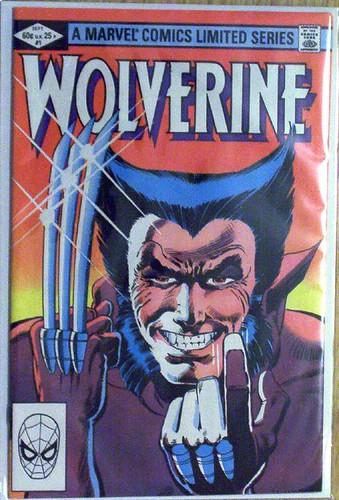
Wolverine No. 1, which I bought yesterday
I played a short session of $30/$60 6-max limit tonight and won a little bit. I think one of the best ways for me to win shorthanded limit games is to only play one table at a time.
At these limits, most players are loose and hyper-aggressive. Hand reading becomes more important than I realized previously.
I've enjoyed reading the following articles about keys to beating tough shorthanded limit games. I like the authors' advice about varying betting patterns and finding ways to weather the storm. I wish I had known some of these tips when I actually played limit regularly.
Q&A #14: Dealing with Tough Players in Short-Handed Limit Hold 'em, by Ed Miller
Q&A #60: Beating Hyper-Aggressive Limit Games, by Ed Miller
Book Exerpt: The Bet-Bet Line, from "Winning in Tough Hold 'em Games," by Nick "Stoxtrader" Grudzien and Geoff "Zobags" Herzog
Tips to Beat Online Tight-Aggressive but Still Popular Limit Hold 'em Games, by Peter Rus
Problem adjusting to aggression in SH games and very frustrated, from 2+2 forums
Monday, February 19, 2007
Back in Action
The FTOPS main event was a big, fun tourney in which several bloggers represented -- brdweb, iakaris, fuel, raveen, lucko, hoyazo, cmitch and probably a few others that I'm missing. Congrats to brdweb for his 38th-place finish!
As for me, I finished about 30 outside of the money in 470-something place. This tourney had the best structure of any MTT I have ever played. Starting stacks were very deep, with 5,000 chips to play with and slow-moving blinds. The large stacks made me feel comfortable to take my time and choose my spots carefully, which is something I often fail to do when the blinds are too high in proportion to my stack.
I started off really hot. I was dealt KK twice, took down a couple of pots with flush draws, hit two pair off the blinds twice and caught two sets. At the high-point, I had somewhere around 25,000 chips.
But then I lost it when I moved in with a flush draw and an overcard vs. top pair, top kicker Tens. I feel good about that play because I had no desire to fold my way into the money. I wanted to keep building my stack, and pushing in with a coin-flip on the flop against a weak made hand is the way to do it. A fold would have been super weak.
At the same time, I was playing in the Big Game, which brought out a very tough field. Thanks to MiamiDon for organizing it.
I held the chip lead heading into the final table, but the second- and third-place stacks were directly to my left -- eventual winner Pauly (congrats!) and Fuel.
The crucial hand came against Pauly. I raised with T9s, and he called from the button. The flop came Qc-Tc-4d. My thinking went like this: Pauly cold called from the button, so it's unlikely that he has a strong Queen. The pot was already pretty large, and I felt like he would bet at the flop with any pocket pair, any flopped pair or any draw. I decided that against that kind of range, a pair of Tens wasn't half bad! Because any bet would basically pot commit him, I decided to check-raise him all in. That's exactly what happened, and Pauly turned over Kh-Qh for the best hand, which held up.
Pauly made a good play. His flat call on the flop made me think he had a low pocket pair or a weak drawing hand rather than high cards. I wonder if I out-thought myself by deciding to play a large pot in this spot. If I had bet out on the flop, it's possible I could have folded to a raise. Meh. I pushed and made (sloppy) quad twos a few hands later against 88. Then I busted with TT vs. an Ace that hit.
---
Here's an exerpt from a comment Hoy recently made on MiamiDon's blog. I post it here because I feel the same way he does, except in reverse. My speciality is cash games rather than tourneys:
Perhaps the bottom line is that we feel the swings most at the games we don't excel at, which makes perfect sense.
---
One of those games I don't excel at is shorthanded limit hold 'em. And yet, I continue to take shots at it every once in a while because I want a change in pace from the daily no limit cash game grind against the same freakin' players.
I read on 2+2 recently that many successful shorthanded limit players see close to 40 percent of flops! Because I view limit as being a more mathematical game, I would imagine that this degree of looseness may be close to correct. I don't know and I don't understand how to see so many flops and still be a winning player. It's that lack of comprehension that will forever keep me from being a winner in limit.
So, unless and until I learn how to play a lot better, I'm swearing off shorthanded limit hold 'em at any level above 5/10. It'll save me a lot of money.
---
The inability to deposit and withdraw money from poker sites remains the biggest issue in the poker world. Ever since Neteller stopped doing business with U.S. players and its assets were frozen by the feds, the games have been dropping in quality.
There's no doubt in my mind that the games will steadily get worse until new payment options gain credibility and widespread acceptance. MyWebATM and Giftcard.com are reportedly filling part of the void, but we're a long way away from the ease of transactions we experienced back in the heyday of the USS Neteller and the USS Firepay.
It's interesting to read and hear about the responses of many poker players to the bleak picture in the poker world. Many players have withdrawn their bankrolls or won't play anymore, and that may be appropriate for their situations.
But for me and many other players, those kinds of actions are decidedly -EV. Sure the games are getting tougher, the fish are busting and it's difficult to turn virtual dollars into real ones. On the other hand, nothing has really changed for the player sitting at the table. We still need to scope out the most fishy tables, find the best values, play our best game and grow our bankrolls to the best of our ability. If you're a winning player, I don't understand why the UIGEA would change your approach to the game itself.
---
These last couple of weeks brought a much-needed break from blogging because I felt like my posts were getting worse. I was also feeling paranoid about writing too much about how I play and about the inherent public nature of a blog.
I toyed with the idea of stopping the blog altogether, but the fact is that it makes me a better poker player. Even if I'm just rambling on about random crap (like today for example), at least I'm putting some thought and effort into reflecting on the game.
Now I plan on getting back on schedule. While the primary purpose of this space is to help me become a better poker player, I hope it's also informative, interesting and instructive for you. I realize I'll frequently fall short in this space of achieving those goals, but I'll nail it sometimes, too.
As for me, I finished about 30 outside of the money in 470-something place. This tourney had the best structure of any MTT I have ever played. Starting stacks were very deep, with 5,000 chips to play with and slow-moving blinds. The large stacks made me feel comfortable to take my time and choose my spots carefully, which is something I often fail to do when the blinds are too high in proportion to my stack.
I started off really hot. I was dealt KK twice, took down a couple of pots with flush draws, hit two pair off the blinds twice and caught two sets. At the high-point, I had somewhere around 25,000 chips.
But then I lost it when I moved in with a flush draw and an overcard vs. top pair, top kicker Tens. I feel good about that play because I had no desire to fold my way into the money. I wanted to keep building my stack, and pushing in with a coin-flip on the flop against a weak made hand is the way to do it. A fold would have been super weak.
At the same time, I was playing in the Big Game, which brought out a very tough field. Thanks to MiamiDon for organizing it.
I held the chip lead heading into the final table, but the second- and third-place stacks were directly to my left -- eventual winner Pauly (congrats!) and Fuel.
The crucial hand came against Pauly. I raised with T9s, and he called from the button. The flop came Qc-Tc-4d. My thinking went like this: Pauly cold called from the button, so it's unlikely that he has a strong Queen. The pot was already pretty large, and I felt like he would bet at the flop with any pocket pair, any flopped pair or any draw. I decided that against that kind of range, a pair of Tens wasn't half bad! Because any bet would basically pot commit him, I decided to check-raise him all in. That's exactly what happened, and Pauly turned over Kh-Qh for the best hand, which held up.
Pauly made a good play. His flat call on the flop made me think he had a low pocket pair or a weak drawing hand rather than high cards. I wonder if I out-thought myself by deciding to play a large pot in this spot. If I had bet out on the flop, it's possible I could have folded to a raise. Meh. I pushed and made (sloppy) quad twos a few hands later against 88. Then I busted with TT vs. an Ace that hit.
---
Here's an exerpt from a comment Hoy recently made on MiamiDon's blog. I post it here because I feel the same way he does, except in reverse. My speciality is cash games rather than tourneys:
"I still am more or less clueless in any cash game I play of any real worth. If I could really understand why, I'm sure I would have made the necessary adjustments a long time ago. ...On the other hand, I donk it up damn good in multi-table tourneys, but cash games seem to come naturally. He comments that cash games cause more variance that tourneys, which is probably true, but maybe I don't feel the swings as much because wins aren't so far apart. Even when I play well, it's so discouraging to bust out of tournaments.
For me I've proven to myself that I'm a true cash game donk, and there is so much more variance in terms of one's roll anyways, so I just gave up trying after only a brief sojourn to verify that I, in fact, heehaw at the cash games."
Perhaps the bottom line is that we feel the swings most at the games we don't excel at, which makes perfect sense.
---
One of those games I don't excel at is shorthanded limit hold 'em. And yet, I continue to take shots at it every once in a while because I want a change in pace from the daily no limit cash game grind against the same freakin' players.
I read on 2+2 recently that many successful shorthanded limit players see close to 40 percent of flops! Because I view limit as being a more mathematical game, I would imagine that this degree of looseness may be close to correct. I don't know and I don't understand how to see so many flops and still be a winning player. It's that lack of comprehension that will forever keep me from being a winner in limit.
So, unless and until I learn how to play a lot better, I'm swearing off shorthanded limit hold 'em at any level above 5/10. It'll save me a lot of money.
---
The inability to deposit and withdraw money from poker sites remains the biggest issue in the poker world. Ever since Neteller stopped doing business with U.S. players and its assets were frozen by the feds, the games have been dropping in quality.
There's no doubt in my mind that the games will steadily get worse until new payment options gain credibility and widespread acceptance. MyWebATM and Giftcard.com are reportedly filling part of the void, but we're a long way away from the ease of transactions we experienced back in the heyday of the USS Neteller and the USS Firepay.
It's interesting to read and hear about the responses of many poker players to the bleak picture in the poker world. Many players have withdrawn their bankrolls or won't play anymore, and that may be appropriate for their situations.
But for me and many other players, those kinds of actions are decidedly -EV. Sure the games are getting tougher, the fish are busting and it's difficult to turn virtual dollars into real ones. On the other hand, nothing has really changed for the player sitting at the table. We still need to scope out the most fishy tables, find the best values, play our best game and grow our bankrolls to the best of our ability. If you're a winning player, I don't understand why the UIGEA would change your approach to the game itself.
---
These last couple of weeks brought a much-needed break from blogging because I felt like my posts were getting worse. I was also feeling paranoid about writing too much about how I play and about the inherent public nature of a blog.
I toyed with the idea of stopping the blog altogether, but the fact is that it makes me a better poker player. Even if I'm just rambling on about random crap (like today for example), at least I'm putting some thought and effort into reflecting on the game.
Now I plan on getting back on schedule. While the primary purpose of this space is to help me become a better poker player, I hope it's also informative, interesting and instructive for you. I realize I'll frequently fall short in this space of achieving those goals, but I'll nail it sometimes, too.
Tuesday, January 02, 2007
Limit poker: A love/hate relationship
I spent more than a year and a half trying to learn limit hold em and move up to higher stakes. From my initial foray into the 2/4 limit waters at Internet cafes in Santiago, Chile to shorthanded efforts in a Waikiki hotel room, I struggled to beat the game.
I have a different perspective on limit games than many players. I don't look at limit as a grind; instead, I see it as a more pure form of poker where you need to wrestle pennies or dollars in expected value from every bet. Every hand you're involved in has several betting actions, and each of them is important. I liked that, and I knew the principles involved in limit were essential to improving my all-around poker game.
From December 2004 through May 2006, limit hold em was my main game before I finally threw my hands up in the air and went for the easy money to be found at no limit tables.
Here are my 2006 limit results:
Those aren't exactly inspiring numbers, and I'm at a loss to explain why I can't seem to beat these games. I always spend time to find loose tables, and I think through my actions before making them.
Obviously, my place is at the no limit tables, but I can't abandon limit entirely either because it's so important to other forms of poker that I hope to get better at (Triple Draw, O8, Stud, Stud8, etc.)
Either I have a fundamental misunderstanding of the game, or I make adjustments too frequently, or the variance is higher than I expected.
I will say this: I feel like my limit background prepared me well for no limit games, which seem easy by comparison. Without limit, I wouldn't be mentally ready for the swings of the game, I wouldn't know how to play shorthanded games, and I wouldn't be familiar with concepts like way ahead/way behind situations. These aspects of the game go over the heads of many no limit players who don't have much limit experience.
I don't know where to go from here except to play limit games occasionally and try to stay sharp.
My temporary limit strategy is simple: Play tight, play short sessions and leave as soon as I get ahead.
I have the utmost respect for strong limit players, and maybe someday I'll be a winner at these games.
I have a different perspective on limit games than many players. I don't look at limit as a grind; instead, I see it as a more pure form of poker where you need to wrestle pennies or dollars in expected value from every bet. Every hand you're involved in has several betting actions, and each of them is important. I liked that, and I knew the principles involved in limit were essential to improving my all-around poker game.
From December 2004 through May 2006, limit hold em was my main game before I finally threw my hands up in the air and went for the easy money to be found at no limit tables.
Here are my 2006 limit results:
| 1/2 | $3 |
| 2/4 | $53 |
| 3/6 | $188 |
| 4/8 | $0 |
| 5/10 | $1,462 |
| 6/12 | $448 |
| 8/16 | $359 |
| 9/18 | $218 |
| 10/20 | $958 |
| 15/30 | $5,676 |
| 25/50 | $91 |
| 30/60 | $1,787 |
| 50/100 | $1,160 |
| Total | $6,065 |
Those aren't exactly inspiring numbers, and I'm at a loss to explain why I can't seem to beat these games. I always spend time to find loose tables, and I think through my actions before making them.
Obviously, my place is at the no limit tables, but I can't abandon limit entirely either because it's so important to other forms of poker that I hope to get better at (Triple Draw, O8, Stud, Stud8, etc.)
Either I have a fundamental misunderstanding of the game, or I make adjustments too frequently, or the variance is higher than I expected.
I will say this: I feel like my limit background prepared me well for no limit games, which seem easy by comparison. Without limit, I wouldn't be mentally ready for the swings of the game, I wouldn't know how to play shorthanded games, and I wouldn't be familiar with concepts like way ahead/way behind situations. These aspects of the game go over the heads of many no limit players who don't have much limit experience.
I don't know where to go from here except to play limit games occasionally and try to stay sharp.
My temporary limit strategy is simple: Play tight, play short sessions and leave as soon as I get ahead.
I have the utmost respect for strong limit players, and maybe someday I'll be a winner at these games.
Subscribe to:
Posts (Atom)

