Many losing poker players can choose not to be fish. They could decide to win, if they had the motivation to work at it. There's an incredible amount of dead money in the poker world, and I have several friends who could get a piece of it if they would listen and learn.
Poker is a game of skill in the long run, and good players will always win over a significant enough stretch of hands. There are many simple ways to become a winner. The problem most players have is that they're unwilling to take the steps necessary to guarantee victory. Of course, some people just don't "get it," but I believe most people with average or better intelligence have the capability to do what it takes.
I know a few players who simply refuse to do what it takes to win. Here are their biggest failings:
They won't learn how to play a tight-aggressive style, which I've found to be profitable even in shorthanded games. Sure, a loose-aggressive style may be more profitable for strong players, but TAG players make money because they don't put their money in without a quality hand, and they don't call bets unless they think they're going to win.
Perhaps the biggest leak losers have is that they won't play limits appropriate to their bankroll. If they would follow Chris Ferguson's bankroll requirements, they would have a much better chance of minimizing losses while slowly building up their savings.
The third common failing of bad players is that they lack discipline. They won't read books, blogs and magazines. They won't watch videos. They won't read 2+2. They won't learn from their losing hands. They won't use PokerTracker and PokerAce. They won't stop playing when they're tired or take a break during a losing streak. They can't stop chasing losses when behind or be satisfied with a small win when ahead.
This is pretty straightforward stuff, and I'm sure most people reading this know these basics already. But the vast majority of poker players are career losers, and I hope one or two of them will wake up and realize it doesn't have to be this way.
Thursday, September 13, 2007


Tuesday, September 11, 2007
Casino Arizona
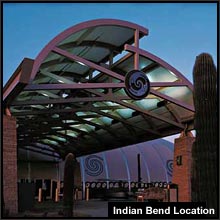
I got in to Phoenix late Monday night, hopeful that I would have enough time to check out the games at Casino Arizona. Fortunately, I found out I had no obligations until dinnertime Tuesday, so that gave me all day to gamble it up.
When I got in the cab, I quickly learned that there were two casinos called Casino Arizona, each about equidistant from my hotel. It's so stupid to name your casinos the same thing, especially when they're only about four miles from each other. I also didn't like that at Holland Casino. Come on guys, show some originality.
Anyway, I told the taxi driver to take me to the larger of the two. Unfortunately, there was no poker (except 3-card poker) at the McKellips location. I sat at a blackjack table for about 15 minutes, lost $7 and decided to get the hell out of that money hole.
I promptly found a cab to the other Casino Arizona at Indian Bend, and I was really happy I did.
It had 46 tables spreading limits from 3/6 to 80/160. Betting in no limit games was capped at $150 at a time, so the no limit tables were either 5/150 (with 3/5 blinds and a $350 max buy-in), or 10/150 (with 5/10 blinds and a $1,000 max buy-in). I got on the list for 10/150 but sat down at an open 5/150 table.
I'm convinced that no matter what casino I go to in life, no matter what the stakes, that at least half of the players at every table will be complete idiots. I looked up at the TVs on the wall and saw a commercial for DeVry Institute, and their slogan was, "People are smart." No they're not. They're dumbasses who think it's a good idea to come to a casino and lose their money, hopefully to me.
Even in four hours of play, I saw some crazy things. I was a woman raise and reraise her $1,000 stack all-in, $150 at a time, with only AJ for top pair, shitty kicker on an A35 board. The other guy had A5, which held up. I got all in three ways preflop with KK against J9 and another hand that mucked. Of course, the J9 hand flopped top pair, turned two pair and rivered a full house.
In one hand, I posted from the cutoff after taking a bathroom break and got to see a free flop with 43o. The flop came 52x, giving me the open-ended straight draw. A middle position player bet pot, about $25, and I called. The turn and river were both checked down, and I didn't improve.
"I think you can beat a 4 high," I said, as I tossed my hand into the middle.
"Wait, that's what I have," said the other guy in the hand.
I quickly snatched my hand back before it touched the muck or the dealer's hand. My opponent also had 43, and we chopped the pot with both of us holding the nut low. That had never happened to me before. Of course, I could have bet and taken down the pot, but then I wouldn't have the story.
There were only two other hands of note. In one, I raised preflop with AK and got a caller from the button. The flop brought an Ace, and I bet my hand the whole way until my opponent was all in. Amazingly, my AK held up in an all-in confrontation. That doesn't usually happen.
In another hand, I saw a free flop from the big blind with J4o against a bunch of limpers. The flop was AJJ, and I bet it out. I got two callers. I bet the turn again, and this time only the utg limper called. Before the river, the utg player asked, "How big is your kicker?"
That gave me a pretty sick feeling, so I checked and called his $100 river bet. He flipped over AJo for the flopped full house after limping with that crap utg. If I were playing better, I could have folded, but I was thinking that he was so loose that his range included a ton of hands I could beat. Also, with the A and a 9 out there, I thought we might chop the pot even after his comment.
Overall, I lost about $250, which isn't too bad. On another day, I might have been up $1,000. I bet the mid-stakes limit games are also good, although I don't know whether I'll have time to go back to the casino.
I'm easily annoyed by kids who won't shut up about their bad beats and old farts throwing away their retirement checks, but I'm consoled that much of the time that money winds up in my pockets.
Monday, September 10, 2007
AA no good
Pot-limit Omaha remains fun on Full Tilt, where I've been playing PLO and limit hold em as I rebuild my bankroll there. 5/10 no limit hold em is still my main game on other sites, but it's educational to diversify.
One thing I know: all of these games are very profitable right now. I haven't seen the tables so loose in at least a year. I think it must be because of football season and WSOP Europe.
In PLO, it's taking me time to understand when wrap-around straight draws are valuable, and how shitty AAxx hands are.
Here's one AAxx hand that went right, followed by another than went wrong:
1) Limp-folding Aces is the only way to go. I'm starting to get used to it.
http://www.pokerhand.org/?1465461
2) I flopped top set of Aces against a short stack who also flopped a straight with a redraw to a higher straight. I guess I misplayed this hand by raising the flop, but I wanted to get it all in against the short stack. I would have folded against a deeper stack, and I also would have likely folded after that 7 on the turn.
http://www.pokerhand.org/?1466613
This hand isn't a good example, but it got me thinking about big wrap straight draws. I think it will take some time before I can instinctively count all those potential outs. Lyle Berman wrote in his "Super System 2" chapter that "in order to be 50-50 against a set, you really need seventeen outs twice. This is significant for Omaha, because most people think it’s thirteen or fourteen, as it is in hold’em."
Even if my opponent had held the five-way wrap straight draw 2467 on a board like K35, he would have still been a slight dog against my AA63 hand with 14 outs (Two Aces and three each of 2467) twice.
One thing I know: all of these games are very profitable right now. I haven't seen the tables so loose in at least a year. I think it must be because of football season and WSOP Europe.
In PLO, it's taking me time to understand when wrap-around straight draws are valuable, and how shitty AAxx hands are.
Here's one AAxx hand that went right, followed by another than went wrong:
1) Limp-folding Aces is the only way to go. I'm starting to get used to it.
http://www.pokerhand.org/?1465461
2) I flopped top set of Aces against a short stack who also flopped a straight with a redraw to a higher straight. I guess I misplayed this hand by raising the flop, but I wanted to get it all in against the short stack. I would have folded against a deeper stack, and I also would have likely folded after that 7 on the turn.
http://www.pokerhand.org/?1466613
http://twodimes.net/h/?z=3049698
pokenum  -o 8h 6c 4c 2d  - ad ac 6s 3s  -- as 5d 3d
Omaha Hi: 820 enumerated boards containing As 5d 3d
cards          win   %win  lose  %lose  tie  %tie     EV
6c 4c  2d  8h  505  61.59   307  37.44    8  0.98  0.621
6s 3s  Ac  Ad  307  37.44   505  61.59    8  0.98  0.379
This hand isn't a good example, but it got me thinking about big wrap straight draws. I think it will take some time before I can instinctively count all those potential outs. Lyle Berman wrote in his "Super System 2" chapter that "in order to be 50-50 against a set, you really need seventeen outs twice. This is significant for Omaha, because most people think it’s thirteen or fourteen, as it is in hold’em."
Even if my opponent had held the five-way wrap straight draw 2467 on a board like K35, he would have still been a slight dog against my AA63 hand with 14 outs (Two Aces and three each of 2467) twice.
http://twodimes.net/h/?z=3054149
pokenum  -o 2d 4c 6c 7h  - ad ac 6s 3s  -- 5d 3d ks
Omaha Hi: 820 enumerated boards containing Ks 5d 3d
cards          win   %win  lose  %lose  tie  %tie     EV
6c 4c  2d  7h  398  48.54   414  50.49    8  0.98  0.490
6s 3s  Ac  Ad  414  50.49   398  48.54    8  0.98  0.510
Friday, September 07, 2007
More math...you know you love it
Picking up from yesterday, it would appear that making an all-in move on any undercard flop with JJ in that situation was a break-even play at best.
Dustin, a commenter, pointed out that I failed to account for times when JJ will suck out on the turn or river in this situation, which will happen about 8 percent of the time. To fix this:
(.55 * -$140) + [.12 * (.92 * -$1,000)] + (.33 * $580) = -$77 - $110.40 + $191.40 = $4.
But even though we get a positive number, this equation still doesn't account for the times the LP player hits his hand and busts the JJ. So I still don't think this play is +EV.
It's interesting to note that this play becomes more favorable for the JJ player if he's playing a smaller stack, and worse when playing a bigger stack.
After all these calculations, I'm thinking that it might make more sense to make this play with QQ from the big blind against two raises. Personally, I don't like pushing all-in or 4-betting preflop with QQ unless I have a strong read, but I also hate folding what may be the best hand in this situation.
So let's run the same scenario with QQ, assuming that the QQ player in the big blind will cold call the reraise preflop, fold if an Ace or King flops, and push all in on any undercard board.
Six combinations of AA and KK will call and be way ahead, one combination of QQ will call and be tied for a $70 profit, while 44 combinations of AK (16), AQ (8), KQs (2), JJ (6), TT (6) and 99 (6) will fold. An Ace or King will flop about 40 percent of the time.
(.40 * -$140) + {[.60 * (6/51)] * -$920} + {[.60 * (1/51)] * $70} + {[.60 * (44/51)] * $580}= -$56 - $64.94 + $0.82 + $300.24 = $180.12
Again, this equation is flawed because it ignores the chance that the LP player will flop a big hand. But it's pretty amazing that QQ seems to do so well under these circumstances.
Based on this math, I believe that when there's a late position raiser and a small blind reraiser, calling with QQ and pushing any undercard flop is often the best play.
Dustin, a commenter, pointed out that I failed to account for times when JJ will suck out on the turn or river in this situation, which will happen about 8 percent of the time. To fix this:
(.55 * -$140) + [.12 * (.92 * -$1,000)] + (.33 * $580) = -$77 - $110.40 + $191.40 = $4.
But even though we get a positive number, this equation still doesn't account for the times the LP player hits his hand and busts the JJ. So I still don't think this play is +EV.
It's interesting to note that this play becomes more favorable for the JJ player if he's playing a smaller stack, and worse when playing a bigger stack.
After all these calculations, I'm thinking that it might make more sense to make this play with QQ from the big blind against two raises. Personally, I don't like pushing all-in or 4-betting preflop with QQ unless I have a strong read, but I also hate folding what may be the best hand in this situation.
So let's run the same scenario with QQ, assuming that the QQ player in the big blind will cold call the reraise preflop, fold if an Ace or King flops, and push all in on any undercard board.
Six combinations of AA and KK will call and be way ahead, one combination of QQ will call and be tied for a $70 profit, while 44 combinations of AK (16), AQ (8), KQs (2), JJ (6), TT (6) and 99 (6) will fold. An Ace or King will flop about 40 percent of the time.
(.40 * -$140) + {[.60 * (6/51)] * -$920} + {[.60 * (1/51)] * $70} + {[.60 * (44/51)] * $580}= -$56 - $64.94 + $0.82 + $300.24 = $180.12
Again, this equation is flawed because it ignores the chance that the LP player will flop a big hand. But it's pretty amazing that QQ seems to do so well under these circumstances.
Based on this math, I believe that when there's a late position raiser and a small blind reraiser, calling with QQ and pushing any undercard flop is often the best play.
Thursday, September 06, 2007
More on Hand Combos
Every poker player has been in this spot before: A late position player raises, and you get dealt a monster like KK and raise it up from the small blind. The big blind and late position player both call. When rags flop, you continuation bet, and the big blind pushes all in. The late position player folds, and you need to decide what to do.
Sure the big blind could have flopped a set, but you can't always fold because you're afraid of a hidden set on a somewhat uncoordinated board. It's more likely that the big blind is pushing an overpair like JJ, and you call and take his stack. A set would usually smooth call or put in a smaller raise.
So if I'm holding KK, I'm going to call most of the time unless I have a read or a feeling that someone is overbetting their set for value.
But what about from the big blind's perspective? Sure he'll lose when I have AA, KK or QQ, but he'll win any time I was raising preflop and continuation betting with AK, AQ, KQs, JJ, TT or 99, which is a pretty accurate list of my 3-betting range from the small blind (except for times when I'm making a play, but let's not delve into that).
I want to find out if it's possible that the big blind is right to push with a hand like JJ, knowing that he'll lose to a higher overpair but also knowing I'll fold lots of hands that he beats. Using hand ranges and EV calculations, I'm going to dissect this kind of hand.
Here's the hand:
5/10
Hero posts small blind $5
Villain posts big blind $10
Villain has $1,000, Hero has him covered
*** Dealing down cards ***
Hero is dealt Ks Kc
Villain is dealt Js, Jd
LP raises $45
Hero raises $140
BB calls $135
LP calls $100
Pot: $420
*** Dealing Flop *** [ 2s, 6h, 7c ]
Hero bets $300
Villain is all-in for $860.
LP folds.
Hero calls all-in for $560.
*** Dealing Turn *** [ 6d ]
*** Dealing River *** [ Qs ]
Hero wins $2,140 with two pairs, Kings and Sixes.
Let's assume that the big blind will push all in on any undercard flop and I will call 100 percent of the time with AA, KK and QQ. Let's also assume that I'll fold AK, AQ, KQs, JJ, TT and 99 100 percent of the time. Up until the point the Villain goes all in, there are many times when I would have played that range identically, as well as had a strong read on him that he had a hand like JJ.
AA, KK and QQ add up to 18 possible combinations that have my opponent slaughtered (6 combinations of each).
AK, AQ, KQs, JJ, TT and 99 add up to 16+16+4+1+6+6 combinations, which equals 49 hand combinations that I'll fold.
If my math is right (and it may be totally wrong, in which case I would appreciate being corrected):
There's a 27 percent chance (18/67) that my opponent will lose his stack by making this play, and a 73 percent chance (49/67) that he'll win what's already in the pot.
.27 * -$1,000 = -$-270
.73 * $580 ($140+$140+$300)= $423.40
EV = $153.40
This initial calculation makes it look like this is a profitable play to make with JJ.
But wait. What about those times that an A, K or Q flops, and the JJ has to fold to a continuation bet? I did the math for this once before, and the odds of any one of any three cards flopping is 55.3 percent. That means there's a 55 percent chance that my opponent will lose what's already invested in this pot, if we assume he folds 100 percent of the time an overcard flops:
.55 * -$140 = -$77
And he'll push the other 45 percent of the time (12 percent of the which he gets busted [.45 * .27], and 33 percent on the time he'll win what's already in the pot [.45 * .73]):
.12 * -$1,000 = -$120
.33 * $580 = $191.40
Grand Total:
-$77 - $120 + $191.40 = -$5.60.
So it would appear that given this range, calling from the big blind with JJ and the intent of making this play will lose you money in the long run, but not much -- only $5.60 on average -- as long as the LP player folds (which may be a big "if").
I'm not going to do the math all over again right now, but I would think widening the SB's hand range and changing the BB's holding to QQ would be enough to put this play into +EV territory.
---
For a different hand combo example, here's an old 2+2 hand that I referred to in the last post's comments: 3/6 Set Kings turn play.
Sure the big blind could have flopped a set, but you can't always fold because you're afraid of a hidden set on a somewhat uncoordinated board. It's more likely that the big blind is pushing an overpair like JJ, and you call and take his stack. A set would usually smooth call or put in a smaller raise.
So if I'm holding KK, I'm going to call most of the time unless I have a read or a feeling that someone is overbetting their set for value.
But what about from the big blind's perspective? Sure he'll lose when I have AA, KK or QQ, but he'll win any time I was raising preflop and continuation betting with AK, AQ, KQs, JJ, TT or 99, which is a pretty accurate list of my 3-betting range from the small blind (except for times when I'm making a play, but let's not delve into that).
I want to find out if it's possible that the big blind is right to push with a hand like JJ, knowing that he'll lose to a higher overpair but also knowing I'll fold lots of hands that he beats. Using hand ranges and EV calculations, I'm going to dissect this kind of hand.
Here's the hand:
5/10
Hero posts small blind $5
Villain posts big blind $10
Villain has $1,000, Hero has him covered
*** Dealing down cards ***
Hero is dealt Ks Kc
Villain is dealt Js, Jd
LP raises $45
Hero raises $140
BB calls $135
LP calls $100
Pot: $420
*** Dealing Flop *** [ 2s, 6h, 7c ]
Hero bets $300
Villain is all-in for $860.
LP folds.
Hero calls all-in for $560.
*** Dealing Turn *** [ 6d ]
*** Dealing River *** [ Qs ]
Hero wins $2,140 with two pairs, Kings and Sixes.
Let's assume that the big blind will push all in on any undercard flop and I will call 100 percent of the time with AA, KK and QQ. Let's also assume that I'll fold AK, AQ, KQs, JJ, TT and 99 100 percent of the time. Up until the point the Villain goes all in, there are many times when I would have played that range identically, as well as had a strong read on him that he had a hand like JJ.
AA, KK and QQ add up to 18 possible combinations that have my opponent slaughtered (6 combinations of each).
AK, AQ, KQs, JJ, TT and 99 add up to 16+16+4+1+6+6 combinations, which equals 49 hand combinations that I'll fold.
If my math is right (and it may be totally wrong, in which case I would appreciate being corrected):
There's a 27 percent chance (18/67) that my opponent will lose his stack by making this play, and a 73 percent chance (49/67) that he'll win what's already in the pot.
.27 * -$1,000 = -$-270
.73 * $580 ($140+$140+$300)= $423.40
EV = $153.40
This initial calculation makes it look like this is a profitable play to make with JJ.
But wait. What about those times that an A, K or Q flops, and the JJ has to fold to a continuation bet? I did the math for this once before, and the odds of any one of any three cards flopping is 55.3 percent. That means there's a 55 percent chance that my opponent will lose what's already invested in this pot, if we assume he folds 100 percent of the time an overcard flops:
.55 * -$140 = -$77
And he'll push the other 45 percent of the time (12 percent of the which he gets busted [.45 * .27], and 33 percent on the time he'll win what's already in the pot [.45 * .73]):
.12 * -$1,000 = -$120
.33 * $580 = $191.40
Grand Total:
-$77 - $120 + $191.40 = -$5.60.
So it would appear that given this range, calling from the big blind with JJ and the intent of making this play will lose you money in the long run, but not much -- only $5.60 on average -- as long as the LP player folds (which may be a big "if").
I'm not going to do the math all over again right now, but I would think widening the SB's hand range and changing the BB's holding to QQ would be enough to put this play into +EV territory.
---
For a different hand combo example, here's an old 2+2 hand that I referred to in the last post's comments: 3/6 Set Kings turn play.
Wednesday, September 05, 2007
Would you like interest with that bonus and rakeback?
I haven't played at Absolute Poker in nearly three years, when I was trying to bonus whore and move up to 3/6 limit games. I lost money, I hated the software and I haven't played there since.
That said, I'm thinking about going back to Absolute because of this cool-sounding new promo that gives 9 percent interest on poker accounts, which I first read about through Kick Ass Poker Blog. It appears that you must be an "Elite" level player and keep $1,000 in your account, but other than that I don't see many restrictions.
It sounds like a fantastic deal. Combined with constant bonus offers and rakeback, Absolute seems to be giving away a ton of money -- perhaps enough to even make me play there again. All I need to do now is grow my bankroll to $500,000 and live off the $45,000 a year in interest while continuing to beat the games.
Check out this 2+2 thread for more info.
---
I was saddened to hear that Kuro, the original poker cat, died last week from liver complications from lymphoma and chemotherapy. He was a fantastic kitty, and I'll think of him any time I play the Kuro (6-3).
Thanks for this pot, Kuro:
FullTiltPoker (6 max) - $2/$4 - $160 Cap Pot Limit Omaha Hi
smizmiatch posts the small blind of $2
benba posts the big blind of $4
*** HOLE CARDS ***
Dealt to smizmiatch [6h 3d As Ah]
BotOFallBOTS calls $4
Ronasty calls $4
smizmiatch calls $2
benba raises to $20
BotOFallBOTS calls $16
Ronasty calls $16
smizmiatch raises to $100
benba raises to $160, and is capped
BotOFallBOTS folds
Ronasty folds
smizmiatch calls $60, and is capped
benba shows [Jd Ad Ac Js]
smizmiatch shows [6h 3d As Ah]
*** FLOP *** [8h 4h 6c]
*** TURN *** [8h 4h 6c] [8c]
*** RIVER *** [8h 4h 6c 8c] [9h]
benba shows two pair, Aces and Eights
smizmiatch wins the pot ($357) with a flush, Ace high
That said, I'm thinking about going back to Absolute because of this cool-sounding new promo that gives 9 percent interest on poker accounts, which I first read about through Kick Ass Poker Blog. It appears that you must be an "Elite" level player and keep $1,000 in your account, but other than that I don't see many restrictions.
It sounds like a fantastic deal. Combined with constant bonus offers and rakeback, Absolute seems to be giving away a ton of money -- perhaps enough to even make me play there again. All I need to do now is grow my bankroll to $500,000 and live off the $45,000 a year in interest while continuing to beat the games.
Check out this 2+2 thread for more info.
---
I was saddened to hear that Kuro, the original poker cat, died last week from liver complications from lymphoma and chemotherapy. He was a fantastic kitty, and I'll think of him any time I play the Kuro (6-3).
Thanks for this pot, Kuro:
FullTiltPoker (6 max) - $2/$4 - $160 Cap Pot Limit Omaha Hi
smizmiatch posts the small blind of $2
benba posts the big blind of $4
*** HOLE CARDS ***
Dealt to smizmiatch [6h 3d As Ah]
BotOFallBOTS calls $4
Ronasty calls $4
smizmiatch calls $2
benba raises to $20
BotOFallBOTS calls $16
Ronasty calls $16
smizmiatch raises to $100
benba raises to $160, and is capped
BotOFallBOTS folds
Ronasty folds
smizmiatch calls $60, and is capped
benba shows [Jd Ad Ac Js]
smizmiatch shows [6h 3d As Ah]
*** FLOP *** [8h 4h 6c]
*** TURN *** [8h 4h 6c] [8c]
*** RIVER *** [8h 4h 6c 8c] [9h]
benba shows two pair, Aces and Eights
smizmiatch wins the pot ($357) with a flush, Ace high
Monday, September 03, 2007
Poker is Good for You
This essay was originally published in the September, 2007 issue of The Two Plus Two Internet Magazine at www.twoplustwo.com. View the original copy by clicking here.
POKER IS GOOD FOR YOU
Many people have argued that poker should be considered differently from gambling in general. This argument has been made in discussions of legalization and related topics. Their argument is usually that poker is a skill game, while other gambling games are much less dependent upon skill.
We agree, but believe that they have not gone far enough in explaining many of poker's unique attributes. Poker does not just require skill. It demands and develops many skills and personal qualities which are essential for making all types of decisions, such as choosing a career, investing money, performing a job, and buying a house.1
POKER IS A GREAT TEACHER.
Research clearly proves that people tend to repeat rewarded actions and to discontinue punished ones. Poker teaches by rewarding desirable actions such as thinking logically and understanding other people and by punishing undesirable ones such as ignoring the odds and acting impulsively.2 Other learning principles also apply to poker.
Learning Depends Upon Feedback.
Rewards and punishments are valuable feedback. The faster and clearer the feedback is, the more rapidly you will learn. Unfortunately, for learning many desirable qualities the feedback cycle is slow or unclear. For example, if you make a mistake with an important customer, you may never know why you lost his business. At the poker table you often get much quicker feedback.
Until fairly recently, most people learned how to play poker primarily from trial and error. Over the past few decades a rapidly expanding body of books, videotapes, DVDs, classes, and coaches has helped millions of players to speed up the learning curve, but there is no substitute for experience. You have to make good and bad plays and get rewarded and punished to learn poker's most important lessons.
The More Frequently You Get Feedback, The Faster You Will Learn.
Most important real life decisions are made infrequently, and some of them - such as choosing a career - may be made only once. Poker players make and get feedback on hundreds of decisions every session, which greatly accelerates the learning process.
Lessons Learned In One Situation Often Generalize To Other Situations.
If poker's lessons applied only to how to play games, we would not have written this article. But its lessons apply to virtually every aspect of life. For example, if you are impatient or illogical or can't analyze risks and rewards, you will lose at poker, and you will make many mistakes in business and personal relationships. If poker teaches you how to control your emotions, you will be much more effective almost everywhere.
Young People Generally Learn More Quickly Than Older Ones.
Poker's enemies often insist that they are protecting young people from developing bad habits, but they are really preventing them from learning good ones. Young people love to gamble, sometimes for money, often for much more "things" such as grades, pregnancy, and even their lives.
They get a kick from taking chances, and some of their gambles are just, plain stupid. They risk dying or becoming crippled by crazy stunts on roller skates, bicycles, and snowboards. They get pregnant or AIDS by taking easily avoided sexual risks. It is as impossible to prevent young people from "gambling" (in its broadest sense) as it is to prevent them from experimenting sexually.
Life is intrinsically risky, and learning how to handle those risks is an important part of growing up. Poker teaches you to think of risks and rewards before acting. If it taught nothing else, poker would prevent some young people from making terrible mistakes. More generally, most of poker's lessons will help young people to make critically important decisions.
POKER IMPROVES YOUR STUDY HABITS.
Because you want to be respected, you and nearly everyone else naturally develop high status qualities and neglect low status ones. Unfortunately, status among Americans - especially young ones - is based primarily on physical attractiveness and athletic ability. The highest status people, the ones others envy and want to date, are physically attractive and good at games such as football, basketball, and soccer. Of course, the good looking, athletic children will probably end up working for the more studious ones, but they may not learn that lesson until it is too late.
American students score abysmally on tests of math, science, and verbal skills partly because so many of them think that study is unimportant. They are not stupider than Europeans, Asians, and South Americans, but they are taught from birth that they will be rewarded for looking good and playing athletic games well.
Worse yet, they learn that being studious is often punished. Their parents may be delighted when they get good grades, but young people care immensely about their peers' opinions. Good students are called "nerds" and "geeks."
This anti-intellectualism continues indefinitely. Americans reward good looks and athletic ability far more than studiousness. Models, actors, and athletes get paid several times as much and have much higher status than scientists, teachers, and scholars.
Young people resist studying math, psychology, logic, risk-reward analysis, probability theory, and many other subjects they will need as adults because these subjects seem unrelated to their lives. They don't see how learning them matters in the competitions they care about, the ones for status, popularity, and dates. Since people rarely study these subjects after graduation, many Americans never learn them.
Poker quickly teaches them the value of these subjects. The "nerds" who study poker and subjects such as math, logic, and psychology crush their more attractive and athletic opponents. They even beat smarter people who are too lazy or complacent to study. Winning increases their status and confidence and makes them much more likely to get dates and influence their peers. Poker doesn't just develop study habits and other important qualities; it also increases the value people place on them.
POKER DEVELOPS YOUR MATH SKILLS.
Americans are terrible at math. Our students get abysmal scores on math tests, and most people don't even try to learn math after leaving school. Their weaknesses remain uncorrected forever.
Many people are not just bad at math; they don't even want to get better. They essentially say, "Who needs it?" When they play poker, they quickly learn that they need it. The winners understand and apply it, while the losers either don't try or can't perform the necessary calculations. After their children started playing poker, many parents have exclaimed, "I'm amazed. He actually wants to study math."
POKER DEVELOPS YOUR LOGICAL THINKING.
Many authorities are appalled by Americans' contempt for logic. Instead of thinking logically, too many of us make poor assumptions, rely on intuition, or jump to emotionally-based conclusions.
Poker teaches you to respect and apply logic because it is a series of puzzles. Since you don't know the other players' cards, you need logic to help you to figure out what they have, and then more logic to decide how to use that information well. The same general approach that works in poker will help you to make much more important decisions.
POKER DEVELOPS YOUR CONCENTRATION.
The first step toward solving poker or real life problems is acquiring the right information. Without it you will certainly make costly mistakes. Poker develops information-gathering qualities, especially concentration. Every poker player has missed signals, including quite obvious ones, made mistakes, and then berated himself, "How could I be so stupid?" We can't think of a more effective way to develop concentration.
POKER DEVELOPS YOUR PATIENCE.
Americans are notoriously impatient, which damages many aspects of our lives. We owe trillions of dollars because we buy things on credit instead of waiting until we can pay for them. Our businesses overemphasize short-term results and lose market share to more patient foreign competitors.
Poker develops patience in the most powerful possible way. If you wait patiently for the right situation, you will certainly beat the impatient people who play too many hands. In fact, for most players poker's first lesson is "Be Patient."
POKER DEVELOPS YOUR DISCIPLINE.
Many people lack discipline. They yield to their impulses, including quite destructive ones. Poker develops discipline by rewarding it highly. Virtually all winning players are extremely disciplined.
Their discipline affects everything they do. They fold hands they are tempted to play. They resist the urge to challenge tough players. They avoid distractions, even pleasant ones like chatting with friends or sexually attractive strangers. They don't criticize bad players whose mistakes cost them money. They control their emotions. They have the self-control to do the necessary, but unpleasant things that most people won't do.
Television has created a ridiculously inaccurate image of poker. After seeing famous players screaming and trash-talking, viewers naturally assume that such antics are normal. They are utterly mistaken. Television directors show these outbursts for "dramatic value," and a few players act stupidly to get on TV. You will see more outbursts in a half hour of television than in a month in a card room. Please remember that controlled people are often called "poker faced."
POKER TEACHES YOU TO FOCUS ON THE LONG TERM.
Impatience is not the only cause for short-sightedness. Learning research proves that immediate rewards have much greater impact on people than delayed ones. For example, most American adults are overweight because the immediate pleasure of overeating is more powerful than its disastrous long-term effects such as heart attacks.
Poker players quickly learn that a bad play can have good results and vice versa, but that making decisions with positive, long-term expectation (EV) is the key to success. If you make enough negative EV plays, you must lose. If you make enough positive EV plays, you must win. It is just that simple.
If people thought more of the long term, some of our most serious problems would be solved or become less troublesome. Because of short-sightedness, millions of children drop out of school or get pregnant, and millions of adults neglect their health and finances.
POKER TEACHES YOU THAT FORGOING A PROFIT EQUALS TAKING A LOSS (AND VICE VERSA).
Economists call lost profits "opportunity costs" and they have written extensively about them. Unfortunately, most people haven't read their works, and, if they did, they probably wouldn't agree. They would much rather pass up a chance to make a dollar than risk losing one. They therefore miss many profitable opportunities.
Poker teaches you that lost profits are objectively the same as losses. For example, if the pot offers you 8-to1, and the odds against you are 5-to-1, you should call the bet. Not calling is the same as throwing away money by making a bad call when the odds are against you.
POKER DEVELOPS YOUR REALISM.
You and everyone else deny unpleasant realities about yourself, other people, and many other subjects. You believe what you want to believe. Poker develops realism in the cruelest, but most effective way. If you deny reality about yourself, the opposition, the cards, the odds, or almost anything else, you quickly pay for it.
Hundreds of times a night you must assess a complicated situation: your own and the other players' cards, what the others are going to do, the probability that various cards will come on later rounds, your position, and many other factors, especially your own and the other players' skill and playing style. If you are realistic, you win. If you deny reality, you lose.
POKER TEACHES YOU HOW ADJUST TO CHANGING SITUATIONS.
Most people don't ask themselves, "How is this situation different?" They just do whatever they have always done. Poker demands adjustments because the situation is always changing. One card can convert a worthless hand such as a four flush into an unbeatable one. The player holding the flush and all the opponents should adjust immediately. The player with the winning hand should do whatever will produce the most profit, and the others should cut their losses.
Other things are changing as well. One hand after being in the small blind, the worst position, you have the button, the best position. Every time someone quits and is replaced by a different type of player, the game changes. Every time someone surprises you by folding, checking, betting, or raising you should re-evaluate the situation and adjust to the new information.
Adjusting to real life changes has always been necessary, but it is has become much more important because the pace of change has accelerated enormously. We now experience more changes every year than our ancestors encountered in decades. Technology, the economy, social and moral attitudes, and a host of other factors change so dramatically that Alvin Toffler: "coined the term 'future shock' to describe the shattering disorientation we induce in individuals by subjecting them to too much change in too short a time."3 He argued, "Change is avalanching upon our heads, and most people are grotesquely unprepared to cope with it."4 Poker can help you to cope with our constantly changing world.
POKER TEACHES YOU TO ADJUST TO DIVERSE PEOPLE.
Most people - especially younger ones - have little experience with diverse people. They live in relatively homogenous towns and neighborhoods and usually relate to people who are fairly similar to themselves.
In online and casino poker games, you have to play with whoever sits down. You must compete against very different kinds of people: aggressive and passive, friendly and nasty, educated and uneducated, quiet and talkative, intelligent and stupid, emotionally controlled and uncontrolled, and so on.
You therefore learn how to understand and adjust to people who think and act very differently from you. The faster you and better you do it, the better results you will get. Since you will certainly meet diverse people in more important situations, learning how to relate to them is extremely valuable.5
POKER TEACHES YOU TO AVOID RACIAL, SEXUAL AND OTHER PREJUDICES.
Prejudice is always wrong, but it is especially destructive at the poker table. It causes you to underestimate your opposition and make expensive errors. To play well, you should be "gender-blind, color-blind, and just-about-everything else-blind, because in the end, winning is based on merit."6
Poker provides an extremely "level playing field." In no other popular competition is everyone treated so equally. You can't play golf against Tiger Woods, but you can sit down at any poker table. You can play against anyone from a novice to a world class player, and you will all be treated as equals. If you get the cards and play them well, you will win, no matter who you are.
POKER TEACHES YOU HOW TO HANDLE LOSSES.
Many people can't cope with losses. A lost job, argument, or - God forbid -romantic relationship is a massive tragedy. They can't accept the loss and may even obsess over it. It takes over their lives, making them look backward rather than forward.
Poker teaches you how to cope with losses because they occur so frequently. You lose far more hands than you win, and losing sessions and losing streaks are just normal parts of the game. You also learn that trying to get even quickly is a prescription for disaster. You have to accept short-term losses and continue to play a solid, patient game. You can't be a winner - in poker or life - if you don't learn how to get over losses and move on.
POKER TEACHES YOU TO DEPERSONALIZE CONFLICT.
Many people take conflicts too personally. They may want to beat someone so badly that they "win the battle, but lose the war." Worse yet, if they lose, they may take it as a personal defeat and ache for revenge. Anyone who has seriously played games with painful physical contact (such as football, boxing, and soccer) is less likely to take conflict too personally. Getting hurt teaches some athletes that conflict is just part of the game and life. Alas, many people never learn that lesson.
Poker teaches you to depersonalize conflicts because it is based on impersonal conflict. The objective is to win each other's money, and everyone's money is the same. It doesn't matter whether you win or lose to Harry, Susan, or Bob. Everybody's chips have the same value, and everybody's money spends the same.
Poker quickly teaches you that being bluffed, sandbagged, outdrawn, and just plain outplayed are not personal challenges or insults. They are just parts of the game. Poker also teaches you that taking conflicts personally can be extremely expensive.
If you ache for revenge, you may act foolishly and lose a lot of money. Beating "your enemy" can become so important that you play cards you should fold, try hopeless bluffs, and take many other stupid, self-destructive actions. The Chinese have a wonderful saying, "If you set out for revenge, dig two graves: one for him, and one for you." Poker teaches that principle to every open-minded player.
POKER TEACHES YOU HOW TO PLAN.
Many people don't plan well. Instead of setting objectives and planning the steps to reach them, they react impulsively or habitually. Poker develops your planning ability for an extremely wide range of time periods:
- This betting round
- This entire hand
- This session
- This tournament
- This year
- Your entire poker career
Planning for all of these periods requires setting objectives and anticipating what others will do. For example, pocket aces are the best possible hand, and you hope to build a big pot with them. In early position in a loose-passive game, you should raise because your opponents will probably call. In a wildly aggressive game you should just call, expecting someone to raise, others to call, so that you can reraise.
Poker also teaches you to plan for the entire hand. You use chess-type thinking ("I'll do this, they will do that, and then I'll …"). You may sacrifice some profit on an early betting round to increase your profits for the entire hand.
You can also sacrifice immediate profits for longer-term gains. For example, you may overplay the first few hands to create a "Wild Gambler" image that will get you more action on later hands. Or you may be extremely tight at first to set up later bluffs. Poker teaches you to set clear goals, think of what others will do, plan the actions that will move you toward your goals, and always know why you are doing something.
Good planning requires thinking of multiple contingencies. You should do many "what, if?" analyses. If the next card is a spade, you will bet. If it pairs the board, and Joe bets, you will fold. If it seems innocuous and Harriet bets, you will raise. Most people don't consider nearly enough possibilities. When something unexpected happens, they have no idea what to do.
Planning in real life is so obviously valuable and so rarely done well that we don't need to give any examples. You know that you should do these "what if" analyses and plan your work, finances, and life in general, but that you probably don't plan well.
POKER TEACHES YOU HOW TO HANDLE DECEPTIVE PEOPLE.
Many people are easily deceived. Just look at those late night infomercials that promise you'll quickly get rich, become thin, or relieve all your aches and pains. The promoters wouldn't pay for them if naïve people didn't buy them, and they are only the tip of the iceberg. As Barnum put it, "There's a sucker born every minute."
Because poker players constantly try to bluff, sandbag, and generally deceive each other, you learn how to recognize when someone has a good hand, is on a draw to a good hand, or is flat out bluffing Those skills can help you to spot and react effectively to deceptive people everywhere. A lot of people want to deceive you, and you should learn how to protect yourself.
POKER TEACHES YOU HOW TO CHOOSE THE BEST "GAMES."
"Game" selection is critically important in both poker and life. Poker teaches you how to evaluate yourself, the competition, and the overall situation, and then pick the "games" that are best for you.
Serious poker players recognize that the main reason they win or lose is the difference between their abilities and those of the competition. If they are better than the competition, they win. If they are weaker, they lose.
A secondary consideration is the fit between their style and the game. Let's say that two poker players have equal abilities. Player A will beat a conservative game, but lose in an aggressive one, while Player B will have the opposite results. Obviously, they should choose different games.
Both factors affect your real life results. If you are less talented or have weaker credentials than your competitors, you should switch to a softer game. You should also select a game that fits your style. For example, you and a friend may have similar abilities and credentials, but different temperaments. Perhaps you should work in a large organization, but he should join a small company or start his own business.
Most people don't know how to evaluate themselves and how well they fit into various "games." So they make huge mistakes that they may not realize for many years. Just think of how many people have changed "games" in their thirties and forties. They finally realized, "I don't belong here."
POKER TEACHES YOU THE BENEFITS OF ACTING LAST.
If you act last, you have a huge edge. You know what your opponents have done before acting, but they acted without knowing what you will do. Position is so important that any good player would raise with some cards in last position that he would fold in early position.
Poker is an information-management game, and there are many similar games such as selling and negotiating. The primary rules of all these games are:
- Get as much information as possible.
- Give as little information as possible.
For example, when negotiating, you want the other person to go first to learn his position before expressing yours. Let's say you have to sell an unusual house quickly. A licensed appraiser has said that it is worth approximately $250,000, but that it is so unique that he can't put a precise value on it.
Before offering a price, you want to know how this potential buyer feels. He may love, hate, or be indifferent to its unique features. If he makes the first offer, you get some inkling of his feelings. He may even offer $275,000! Since he seems to love its uniqueness, try for an even higher price.
Job interviewers know the value of acting last. Most employment applications contain a question such as: "Approximate starting salary expected." If you answer, you have given the interviewer your position without knowing what he is willing to pay. Since you are unlikely to get more than you ask for, try to avoid making that first offer.
POKER TEACHES YOU TO FOCUS ON THE IMPORTANT SUBJECTS.
Focusing on unimportant subjects causes expensive mistakes at the poker table and in real life. Serious poker players know that all mistakes are not created equal. Trying too hard to avoid small mistakes can cause much bigger ones.
Overreacting to any opponent's small mistakes can cause the deadly mistake of underestimating him. For example, you may see that an opponent overplays a mediocre hand such as queen-jack offsuit. It's a mistake, but a relatively harmless one, especially because he will get that hand only a few times a night. If he plays the other hands well, don't conclude that he is a weak player.
Your own mistakes should also be analyzed, and some of them can be quite subtle, but very important. For example, you may be so intent on playing "properly" that you seem too serious for the weaker opponents who just want to have a good time. So they avoid you, which reduces your share of the money they give away.
Another error is taking a "by the book" approach that can cause strategic mistakes. For example, you could play your cards in a technically correct way, but almost never bluff. You would lose the profit you could gain from good bluffs, and your opponents will not give you much action on your good hands. The same principle applies to always playing hands the same way. The predictability costs you more than you gain by always being technically correct.
A business analogy would be running your organization so rigidly that all the ordinary decisions are made well, but:
- Your employees are not motivated to be creative when the usual routines won't work. In fact, they may fear being punished for violating procedures.
- Your organization can't respond effectively to the inevitable surprises.
- Your good employees quit.
- Your organization becomes a typical bureaucracy, filled with deadwood and unable to achieve its goals.
POKER TEACHES YOU HOW TO APPLY PROBABILITY THEORY.
If you are like most people, you don't think in terms of probabilities, or you do so very crudely. You think something:
- will happen
- won't happen
- probably will happen
- probably won't happen
You are unlikely to make finer distinctions such as between 30%, 20%, and 10% probabilities.
Poker teaches that these distinctions are important and develops your ability to calculate them. You learn that you should sometimes call a bet if you have a 30% probability of winning, but fold with a 20% probability. You also learn how to estimate probabilities quickly and accurately.
This neglected skill can be applied to many real life decisions. For example, if you have to fly to Los Angeles for a sales call or job interview, it may be worth the time and expense if the probability of success is 30%, but not if it's 20%. Hardly anyone thinks that way which causes many poor decisions.
POKER TEACHES YOU HOW TO CONDUCT RISK-REWARD ANALYSES.
These analyses are a more formal way to use probability theory. Since life is intrinsically risky, you probably can't win at poker or life without accurately assessing risks and rewards.
Risk-reward analysis is a form of cost-benefit analysis which also includes the probabilities of each possible result. Let's say that the pot is $100. You have a flush draw that you expect to win if you make it, but lose if you miss. It will cost you $20 to call the bet. The odds against making your flush are exactly 4-to-1. If you make it, you will win another $20 because you are sure your opponent will call one last bet. You are sure you cannot bluff. Should you call the $20 bet?
You will certainly lose more often than you will win, but the potential gains may outweigh the potential losses. Because we are concerned only with the long term, let's do it 100 times:
| You will win $120 twenty times for a total win of | $2,400 |
| You will lose $20 eighty times for a total loss of | -1,600 |
| Your net gain for 100 times will be | $800 |
| Your expected value for each call is | $8 |
| You should obviously call the bet. |
Poker players constantly do risk-reward analyses, and these analyses are often much more complicated. For example, in deciding whether to semi-bluff7, you should estimate the probabilities, gains and losses of:
- winning the pot immediately because your opponent(s) fold
- winning because you bet again on the next round and your opponent(s) fold
- winning because you catch the card you need to make the best hand
- losing because you get called and don't catch your card.
The math can get difficult, but advanced players learn how to make these analyses quickly and accurately.
The same sort of analysis should be done whenever you have a real life risky situation. Unfortunately, most people don't do it. They buy stocks or real estate, take a job, open a business, or take personal risks without identifying all the outcomes and estimating the probabilities that each will occur. So they make many bad decisions.
Poker is such an excellent teacher for risky decisions that Peter Lynch, former manager of The Magellan Fund and Vice Chairman of Fidelity, once said that a good way to become a better investor was to "Learn how to play poker."8
POKER TEACHES YOU TO PUT THINGS IN CONTEXT AND EVALUATE ALL VARIABLES.
People often ask poker experts, "How should I play this hand?" They are usually frustrated by the standard answer, "It depends on the situation." The expert then asks them about the other players, their own position, the size of the pot, the action on previous hands and betting rounds, and many other subjects. Most people don't want to hear, "It depends on the situation," and they definitely don't want to answer questions.
In fact, they usually can't answer them because they have not counted the pot, thought about the other players, and done all the other things that experts do. They want to know the two or three simple rules for playing a pair of aces, or a full house, or a flush draw, and the experts won't tell them because there aren't any simple rules.
If you play seriously, you will learn that the KISS formula (Keep It Short and Simple) does not apply to poker. More importantly, it does not apply to most significant real life decisions. It has become popular because people want to believe that life is much simpler than it really is. Poker teaches you to ask the same sorts of questions about investment, career, and other decisions that you ask at the poker table so that you make much better decisions.
POKER TEACHES YOU HOW TO "GET INTO PEOPLE'S HEADS."
Poker teaches you to understand and apply psychology because understanding others is absolutely essential. In fact, poker has often been called "a people game played with cards." If you don't understand the other players, you can't win.
We have already discussed psychological subjects such as avoiding prejudice and selecting the right games. We will end this long essay by briefly discussing poker's most important psychological lesson: teaching you what other people perceive, think, and want.
The first step is shifting your focus from yourself to them, and poker forces you to make that shift. If you focus on your own cards, you can't win because poker hands have only relative value. The important issue is not how good your cards are; it is how they compare to the other players' cards. A flush is a very good hand, but it loses to a bigger flush or any full house or better. So poker quickly teaches you to think of what other people have. It also teaches you to think about what they think you have. And even what they think you think they think.9
We and others have written extensively about these subjects, but space limitations allow us to give only a few examples. Good players always consider the other player when making any decision. With the same cards and situation, they would fold if Charley, a very conservative player, bets, but raise if Mary, a very aggressive player, bets.
Good players would also think about how their opponents think about each other. For example, if a perceptive opponent bets into someone whom he believes is very likely to call, he is probably not bluffing. If a good player reraises a maniac, he probably has a much weaker hand than if he reraised a tight opponent. Understanding his perceptions of these other players greatly improves your decisions when you are contesting a pot.
Understanding other people is vital in virtually every area of life. You can't have good personal relationships or succeed in business without being perceptive about people. Since its value in personal relationships is so obvious, we will discuss only two subjects, negotiating and investing.
"The absolutely essential step toward negotiating effectively is to shift your focus from your own position to their position. Unfortunately, most people focus on their own position. Their actions say, in effect, 'If I could just get them to understand MY facts and MY logic and MY needs, they would make the concessions I need.' The other side is saying exactly the same thing.
"They therefore have parallel monologues instead of a genuine dialogue. Both sides repeat themselves again and again, hoping to convince the other to accept their position. But eloquence is no substitute for understanding, and you cannot gain that understanding without shifting your focus and sincerely wanting to understand the other side."10
All good poker players know and apply David Sklansky's "Fundamental Theorem of Poker."11 Less well known is his "Fundamental Theorem of Investing:"
"Before making any investment ... you must be able to explain why the other party is willing to take the other side of the deal... if you cannot come up with a good explanation, your buy, sell or bet is almost certainly not as good as you think."12
Unfortunately, most people don't seriously analyze the other party's reasons. Their attention is focused primarily on themselves, their economics, their analysis, and their reasons for buying or selling. If they thought about the other party's motives and perceptions, they might realize that they are making a disastrous mistake.
The principle is very clear. You should always determine as accurately as you can why the other party is willing to sell, buy, or do other business with you. If you don't understand his reasons, "all the statistics, income statements, balance sheet data, or analysts' recommendations mean little. There is still some reason they are taking your bet - and, if you don't know it, you don't like it."13
We could quote many other authorities on the value of understanding other people, but there is no need to do so. Instead, we will close with a quotation from one of the best selling books of all time: How To Win Friends And Influence People by Dale Carnegie: "If there is one secret of success, it lies in the ability to get the other person's point of view and see things from that person's angle as well as your own."14
Since you can't win at poker without seeing things from other people's angle, you will learn this valuable lesson. You will then become much better at winning friends, influencing people, and making decisions about virtually everything.
CONCLUSIONS
We have described many - but certainly not all - of the skills and personal qualities that poker develops. Most of poker's lessons are variations on one theme: Think carefully before you act. That principle applies everywhere, and far too many people ignore it.
The government's attempts to outlaw poker are based upon a misconception of its nature and value. It is not "just gambling," and it should not be subject to the same rules and penalties as other gambling games. Instead, the government should allow you to play poker in regulated and taxed places because poker is good for you and good for America.
SUMMARY OF POKER'S BENEFITS
Because this essay is so long, you may not want to reprint all of it. We believe that a good summary is simply a list of the headings. Please feel free to reprint as much or as little as you wish.
- Poker Is A Great Teacher.
- Poker Improves Your Study Habits.
- Poker Develops Your Math Skills.
- Poker Develops Your Logical Thinking.
- Poker Develops Your Concentration.
- Poker Develops Your Patience.
- Poker Develops Your Discipline.
- Poker Teaches You To Focus On The Long Term.
- Poker Teaches You That Forgoing A Profit Equals Taking A Loss (And Vice Versa).
- Poker Develops Your Realism.
- Poker Teaches You To Adjust To Changing Situations.
- Poker Teaches You To Adjust To Diverse People.
- Poker Teaches You To Avoid Racial, Sexual And Other Prejudices.
- Poker Teaches You How To Handle Losses.
- Poker Teaches You To Depersonalize Conflict.
- Poker Teaches You How To Plan.
- Poker Teaches You How To Handle Deceptive People.
- Poker Teaches You How To Choose The Best "Game."
- Poker Teaches You The Benefits Of Acting Last.
- Poker Teaches You To Focus On The Important Subjects.
- Poker Teaches You How To Apply Probability Theory.
- Poker Teaches You How To Conduct Risk-Reward Analyses.
- Poker Teaches You To Put Things In Context And Evaluate All Variables.
- Poker Teaches You How To "Get Into People's Heads."
1 We assume, of course, that you will not become obsessed with poker or play for higher stakes than you can afford.
2 These rewards and punishments may not be instantaneous. It may take a while for things to average out.
3 Future Shock, New York, Random House, 1970, Page 4
4ibid, page 14
5 Adjusting to varied players was the primary theme of Alan Schoonmaker's book, The Psychology of Poker, Henderson, NV, Two Plus Two Publishing, 2000.
6 Barbara Connors, "Poker Play" in Maryann Morrison's Women's Poker Night, New York, Kensington Publishing, 2007, p. 26.
7 "A semi-bluff is a bet with a hand which, if called, does not figure to be the best hand at the moment, but has a reasonable chance of outdrawing those hands that initially called it." David Sklansky, The Theory of Poker, p. 91.
8 "Ten lessons poker teaches great investors," by Christopher Graja, Bloomberg's Personal Finance, June, 2001, p. 56
9 See "Multiple level thinking" in David Sklansky and Ed Miller, No Limit Hold 'em: Theory And Practice, Henderson, NV, Two Plus Two Publishing, 2006, pp. 168-175.
10 Alan N. Schoonmaker, Negotiate to win. Englewood Cliffs, NJ, Prentice-Hall, 1989, p. 76
11 "The Fundamental Theorem of Poker" is explained on pages 17-26 of The Theory of Poker.
12 David Sklansky, "The Fundamental Theorem of Investing," Card Player, August 16, 2002, pp. 34-36
13 ibid.
14 Dale Carnegie How To Win Friends and Influence People, NY, Simon and Schuster, 1936, copyright renewed 1964, P. 37. The italics were in the book.
Wednesday, August 29, 2007
HUC5, PLO and Hand Combos
I lost in two straight games to lifesagrind in the Heads-Up Challenge on Full Tilt. Lifesagrind is one of the more aggressive heads-up players I've faced, and he kept me at a disadvantage most of the time. Then he finished me off when I held QQ and KK, so what can you do.
I really prefer PokerStars's heads-up games that have no blind increases. The rising blinds really alter the feel and style of heads-up play, and they make for shorter matches.
---
I've still been playing some Omaha, and it's a really fun game when I win. When I lose, I feel like a lost idiot. One cool part of it is that you can get people's money when they have the worst of it by far, something that seems harder to accomplish in hold 'em:
http://www.pokerhand.org/?1422198
I'm still pretty bad at this game, but I just need practice. I think it'll help develop postflop skills in general.
---
Roy Cooke wrote an article in this month's CardPlayer that discussed a topic I have wondered about in the past. He discusses considering the odds that your opponent holds one of a limited number of hands that your opponent may have based on a narrow read. It should be easy enough to memorize and apply:
So, the odds that your opponent has:
Any pair: 6 possible combinations
Any pair with one card accounted for: 3 remaining combinations
Any pair with two cards accounted for: 1 possible combination
Two unpaired cards (like AK): 16
Two unpaired cards with one accounted for (like AK with one King out): 12
Two unpaired cards with two accounted for (like AK with one King and one Ace out): 9
Two unpaired cards with two accounted for (like AK with two Kings out): 8
Two unpaired cards with three accounted for (like AK with three Kings out): 4
Two unpaired cards with four accounted for (like AK with three Kings and one Ace out): 3
I really prefer PokerStars's heads-up games that have no blind increases. The rising blinds really alter the feel and style of heads-up play, and they make for shorter matches.
---
I've still been playing some Omaha, and it's a really fun game when I win. When I lose, I feel like a lost idiot. One cool part of it is that you can get people's money when they have the worst of it by far, something that seems harder to accomplish in hold 'em:
http://www.pokerhand.org/?1422198
http://twodimes.net/h/?z=3013578That was my biggest PLO hand so far, an $800 pot in my first time playing 2/4. And no, my opponent didn't suck out the straight flush.
pokenum -o 7d 6s 4d 6c - ad qc qd js -- tc 5d 8d 9c
Omaha Hi: 40 enumerated boards containing Tc 9c 8d 5d
cards win %win lose %lose tie %tie EV
6s 6c 7d 4d 1 2.50 39 97.50 0 0.00 0.025
Js Qc Ad Qd 39 97.50 1 2.50 0 0.00 0.975
I'm still pretty bad at this game, but I just need practice. I think it'll help develop postflop skills in general.
---
Roy Cooke wrote an article in this month's CardPlayer that discussed a topic I have wondered about in the past. He discusses considering the odds that your opponent holds one of a limited number of hands that your opponent may have based on a narrow read. It should be easy enough to memorize and apply:
Keep these numbers in mind for hand-reading, and use them when defining your opponents' hands and reckoning your price. There are six possible combinations of any pair; for example: JJ
, J
, J
, J
So, the odds that your opponent has:
Any pair: 6 possible combinations
Any pair with one card accounted for: 3 remaining combinations
Any pair with two cards accounted for: 1 possible combination
Two unpaired cards (like AK): 16
Two unpaired cards with one accounted for (like AK with one King out): 12
Two unpaired cards with two accounted for (like AK with one King and one Ace out): 9
Two unpaired cards with two accounted for (like AK with two Kings out): 8
Two unpaired cards with three accounted for (like AK with three Kings out): 4
Two unpaired cards with four accounted for (like AK with three Kings and one Ace out): 3
Monday, August 27, 2007
Link Monday
Q&A #83: Adjusting to a Deeper Stack AKA What's Wrong With Playing for the Big Score: I like Ed Miller's thoughts on the need to bluff with connectors.
Folding the Nuts: PLO fun here with Todd Brunson.
Sometimes juicy-looking drawing hands have horrible equity on high card boards. I found it interesting how low the odds for my top pair Kings with an open-ended straight draw fell when my opponent held the AA overpair, which naturally robbed me of some outs.
Calling Reraises with Suited Connectors: This post by Fuel stuck with me. I much prefer to play suited connectors in position, but regardless of position they can pay off when they flop big.
Folding the Nuts: PLO fun here with Todd Brunson.
Sometimes juicy-looking drawing hands have horrible equity on high card boards. I found it interesting how low the odds for my top pair Kings with an open-ended straight draw fell when my opponent held the AA overpair, which naturally robbed me of some outs.
Calling Reraises with Suited Connectors: This post by Fuel stuck with me. I much prefer to play suited connectors in position, but regardless of position they can pay off when they flop big.
Thursday, August 23, 2007
Learning Pot Limit Omaha
I've been getting into Pot Limit Omaha the last few days, and it's been a lot of fun (when I've been winning). I didn't know what I was doing yesterday, but today a few tips from Lyle Berman's section of "Super System 2" make me feel much more confident.
Admittedly, I don't have much experience in PLO, but all of Berman's advice seems great for helping me learn the game. I lost a tiny bit playing 1/2, .5/1 and .25/50 the last few days, but I more than made up for those after reading a bit of his chapter.
My first impression is that these games are filled with dead money. They're extremely loose -- far looser than you can find in any hold 'em game anywhere outside of play money. A big reason for that is that you can open up a bit in PLO, but seeing between 80 percent to 100 percent of flops probably isn't a good idea! Don't tell the fish.
Here are a few of Berman's early recommendations that struck me as reading his chapter. The whole book is online for free on the Doyle's Room Web site, which is a tremendous resource. Thanks to Kuro, who originally posted the link some time ago.
_ Berman points out that implied odds are much smaller in Omaha because, "For example, if you're drawing to the nut flush and you hit it on the river, there is a strong chance that nobody is going to call you. Therefore, although you must be aware of your implied odds in Omaha, you must also realize that there's a good chance that you may not get called on the river if you make the nuts."
_ On bet sizing, he suggests typically betting the size of the pot preflop and on the flop, while betting closer to half-pot on the turn and river.
_ He mentions that there's less bluffing: "Most of the bluffing in Omaha happens on uncoordinated flops, and they usually are made by a player sitting in late position."
_ On raising preflop, the book suggests never raising from early position or the blinds. "Here is the general rule: do not raise before the flop from under the gun or from the two blind positions, because you'll be over-committing yourself to your hand." There's also a great section about how to play Aces in Omaha.
_ Any starting hand with two pocket pair has about a 25 percent chance of flopping a set.
The chapter also discusses interesting ideas about playing drawing hands and recognizing the relative strength of wrap draws, backup draws and defensive flush cards. There are also a few great stories about classic hands he remembers playing with guys like David "Devilfish" Ulliot and Bobby Baldwin.
Omaha is an action game, and I can only see it increasing in popularity.
Admittedly, I don't have much experience in PLO, but all of Berman's advice seems great for helping me learn the game. I lost a tiny bit playing 1/2, .5/1 and .25/50 the last few days, but I more than made up for those after reading a bit of his chapter.
My first impression is that these games are filled with dead money. They're extremely loose -- far looser than you can find in any hold 'em game anywhere outside of play money. A big reason for that is that you can open up a bit in PLO, but seeing between 80 percent to 100 percent of flops probably isn't a good idea! Don't tell the fish.
Here are a few of Berman's early recommendations that struck me as reading his chapter. The whole book is online for free on the Doyle's Room Web site, which is a tremendous resource. Thanks to Kuro, who originally posted the link some time ago.
_ Berman points out that implied odds are much smaller in Omaha because, "For example, if you're drawing to the nut flush and you hit it on the river, there is a strong chance that nobody is going to call you. Therefore, although you must be aware of your implied odds in Omaha, you must also realize that there's a good chance that you may not get called on the river if you make the nuts."
_ On bet sizing, he suggests typically betting the size of the pot preflop and on the flop, while betting closer to half-pot on the turn and river.
_ He mentions that there's less bluffing: "Most of the bluffing in Omaha happens on uncoordinated flops, and they usually are made by a player sitting in late position."
_ On raising preflop, the book suggests never raising from early position or the blinds. "Here is the general rule: do not raise before the flop from under the gun or from the two blind positions, because you'll be over-committing yourself to your hand." There's also a great section about how to play Aces in Omaha.
_ Any starting hand with two pocket pair has about a 25 percent chance of flopping a set.
The chapter also discusses interesting ideas about playing drawing hands and recognizing the relative strength of wrap draws, backup draws and defensive flush cards. There are also a few great stories about classic hands he remembers playing with guys like David "Devilfish" Ulliot and Bobby Baldwin.
Omaha is an action game, and I can only see it increasing in popularity.
Wednesday, August 22, 2007
"Blacklist: Recovering the Life of Canada Lee"
My friend Kenny Kilfara is trying to finish his documentary and he could use your support. Please consider helping helping him out, even if it's just a little bit. Thanks!
Here's a copy of the e-mail he sent out recently:
Here's a copy of the e-mail he sent out recently:
Greetings to you all,
Thought this was really exciting, wanted to share it with you: I'm on the homepage of Film Threat Magazine:
http://www.filmthreat.com/
In other news, our documentary BLACKLIST: RECOVERING THE LIFE OF CANADA LEE (www.blacklistTheMovie.com) recently received some nice funding, but we're still looking for more, so if you know anyone who might be interested in contributing on the grassroots scale ($5, $35, $105, $1005 +) check out our fiscal sponsor:
http://www.der.org/donate/
Blacklist is the fifth title from the top.
Also, Evan Evans, son of Jazz legend Bill Evans, has asked to compose music for the film!
Hope you all are doing well. Please help spread the word.
My regards,
Kenny Kilfara
Director/Producer
Blacklist: Recovering the Life of Canada Lee
Tuesday, August 21, 2007
FTOPS Main Event
I was pumped and ready to go for the FTOPS Main Event on Sunday. I played super tight and finished in 402nd place for a $915 prize.
I had qualified for the event through a satellite the night before on my fourth or fifth try, at a total expense of about $250. So I got into the $535 event for less than half price, and I'm now convinced that satellites are the best way to go. I don't know why I was so skeptical of satellites in the past, but they really are filled with some of the biggest gamblers and worst overall players.
After playing this tournament, I find that I really agree with Blinders thinking that tight play gets paid off in MTTs. Sure, it's nice to open up your game a bit when you have a big stack or the blinds are low. But in general, most of the time I couldn't afford to be messing around with many middle-of-the-road type hands unless I was pulling off a steal or squeeze play.
And let me tell you, it's those steals and squeeze plays that kept me alive and made me the money. I only won one hand at showdown for the first four hours of the tournament, and yet I was still able to survive with a playable stack. It's all thanks to steals and resteals. I was very conservative and didn't try them unless I thought I had a high probability of success. I wish I had the balls to make more steals, but the ones I did worked often enough that I only had to pull them off every once in a while. Really, one steal every few rounds worked wonders.
Overall, I saw about 14 percent of flops this tournament, and my table average was usually around 18 percent. Almost everyone was playing tight, and the biggest donks went out fast.
For the first few hours, my biggest hand was KJs when I hit top pair on the flop, bet it out, got called, and then check-raised all in when I picked up a flush draw on the turn.
Then I waited and waited and waited, with some steals thrown in. Thankfully, the bubble passed very quickly. People were busting out all over the place.
At one point I got very short stacked and had to push with A3o from MP. Everyone folded. Then I picked up AK and pushed again from UTG+1. Everyone folded. Then I was dealt AK again!, and even though I was healthy this time, I thought there was a much higher probability of getting an all-in called, so I pushed all-in a third time. Everyone folded. That was fine with me because those blinds alone tripled my stack in three hands.
The biggest hand of the tourney came when an early position player who seemed a little weak and would minraise a lot of hands came in for another minraise. I had him well covered with an M around 7 or 8 or 9, so I pushed all in when I saw AQ. He thought for a while and showed AJ. I was in great shape until he pulled out a backdoor flush on the river. Yarg!
In another big hand (I'm a little fuzzy on whether it happened before or after the previous one), I called two all ins ahead of me when I was shortstacked with AK. The flop hit me, and I tripled up.
But I never recovered from that AQ vs. AJ hand. It wasn't long before I pushed J8o and got called by the big blind. I couldn't suck out a gutshot on the river and I was done.
I was happy with my play though, and it was a great event. I loved the 5,000 chip starting stacks in what was the largest tournament in Full Tilt history, paying out nearly $400,000 to first place with a prize pool of around $2.3 million. I would have liked to have played looser, but I felt like I really had to pick my spots well. Next time, I'm going to donk it up a bit more in the early game. If anything, I got too much respect, if that's possible.
Congrats to cmitch and lucko, who played great tourneys and also made the money.
I had qualified for the event through a satellite the night before on my fourth or fifth try, at a total expense of about $250. So I got into the $535 event for less than half price, and I'm now convinced that satellites are the best way to go. I don't know why I was so skeptical of satellites in the past, but they really are filled with some of the biggest gamblers and worst overall players.
After playing this tournament, I find that I really agree with Blinders thinking that tight play gets paid off in MTTs. Sure, it's nice to open up your game a bit when you have a big stack or the blinds are low. But in general, most of the time I couldn't afford to be messing around with many middle-of-the-road type hands unless I was pulling off a steal or squeeze play.
And let me tell you, it's those steals and squeeze plays that kept me alive and made me the money. I only won one hand at showdown for the first four hours of the tournament, and yet I was still able to survive with a playable stack. It's all thanks to steals and resteals. I was very conservative and didn't try them unless I thought I had a high probability of success. I wish I had the balls to make more steals, but the ones I did worked often enough that I only had to pull them off every once in a while. Really, one steal every few rounds worked wonders.
Overall, I saw about 14 percent of flops this tournament, and my table average was usually around 18 percent. Almost everyone was playing tight, and the biggest donks went out fast.
For the first few hours, my biggest hand was KJs when I hit top pair on the flop, bet it out, got called, and then check-raised all in when I picked up a flush draw on the turn.
Then I waited and waited and waited, with some steals thrown in. Thankfully, the bubble passed very quickly. People were busting out all over the place.
At one point I got very short stacked and had to push with A3o from MP. Everyone folded. Then I picked up AK and pushed again from UTG+1. Everyone folded. Then I was dealt AK again!, and even though I was healthy this time, I thought there was a much higher probability of getting an all-in called, so I pushed all-in a third time. Everyone folded. That was fine with me because those blinds alone tripled my stack in three hands.
The biggest hand of the tourney came when an early position player who seemed a little weak and would minraise a lot of hands came in for another minraise. I had him well covered with an M around 7 or 8 or 9, so I pushed all in when I saw AQ. He thought for a while and showed AJ. I was in great shape until he pulled out a backdoor flush on the river. Yarg!
In another big hand (I'm a little fuzzy on whether it happened before or after the previous one), I called two all ins ahead of me when I was shortstacked with AK. The flop hit me, and I tripled up.
But I never recovered from that AQ vs. AJ hand. It wasn't long before I pushed J8o and got called by the big blind. I couldn't suck out a gutshot on the river and I was done.
I was happy with my play though, and it was a great event. I loved the 5,000 chip starting stacks in what was the largest tournament in Full Tilt history, paying out nearly $400,000 to first place with a prize pool of around $2.3 million. I would have liked to have played looser, but I felt like I really had to pick my spots well. Next time, I'm going to donk it up a bit more in the early game. If anything, I got too much respect, if that's possible.
Congrats to cmitch and lucko, who played great tourneys and also made the money.
Wednesday, August 15, 2007
Bluffed by a n00b
When I arrived at the home game last night, it was four-handed, with two of the players just learning the rules and basics of Omaha Hi/Lo. The guy who runs the game had promised new blood, and here it was.
I really like helping new players, so I gave them all the advice I could. I wanted them to at least know the rules and basic strategies before they started gambling.
A few hands into the 5/10 game, I was dealt Jd 9c 8s 4d in the big blind -- an unplayable hand in O8 unless you can simply check your blind, which I did. The flop came down with something like KQ2 with one diamond, giving me a weak straight draw and a backdoor flush draw. The flop checked around.
The turn brought the Td, giving me the second nut straight and a diamond flush draw. I bet out $10, and only one of the new players -- a woman tournament player -- called me. My read was that she had something, but I figured she would call with a wide range and only raise with the nuts.
The river brought a low diamond, maybe a 5, to complete my flush. Naturally, I bet out $10, fully expecting to get called with some two-pair-type hand that I could take down.
But then she raised! I was shocked. She had a big smile on her face as she looked down at her cards, clearly ecstatic over hitting such a monster hand. I knew pretty quickly that my J-high flush was no good. It was so obvious.
Still, I was leaning toward calling just because she was new to the game, and who knows what unpredictable players hold sometimes. Then she opened her mouth.
"I have to show this hand," she said.
My cards hit the muck pretty damn fast. There was no doubt in my mind I was beaten. It wasn't even worth $10 more.
She turned over a hand with TTT6.
"Four of a kind!" she said.
I buried my face in my hands and had to laugh. Of course, since you can only use two of your cards in Omaha, she really had three of a kind. She had made a common mistake of new players who forget that three of one card in your hand is usually worthless.
What's worse, I had been bluffed off the best hand by a player who didn't even know she was bluffing!
I got her back though with a fake bluff of my own. In a 2/5 NL hold 'em round, I bet my one-card flush draw on the turn and caught top pair Kings on the river. I bet $25 into the small pot, and she mucked, saying she had only made a baby flush on the turn.
Good times. I love live poker.
I really like helping new players, so I gave them all the advice I could. I wanted them to at least know the rules and basic strategies before they started gambling.
A few hands into the 5/10 game, I was dealt Jd 9c 8s 4d in the big blind -- an unplayable hand in O8 unless you can simply check your blind, which I did. The flop came down with something like KQ2 with one diamond, giving me a weak straight draw and a backdoor flush draw. The flop checked around.
The turn brought the Td, giving me the second nut straight and a diamond flush draw. I bet out $10, and only one of the new players -- a woman tournament player -- called me. My read was that she had something, but I figured she would call with a wide range and only raise with the nuts.
The river brought a low diamond, maybe a 5, to complete my flush. Naturally, I bet out $10, fully expecting to get called with some two-pair-type hand that I could take down.
But then she raised! I was shocked. She had a big smile on her face as she looked down at her cards, clearly ecstatic over hitting such a monster hand. I knew pretty quickly that my J-high flush was no good. It was so obvious.
Still, I was leaning toward calling just because she was new to the game, and who knows what unpredictable players hold sometimes. Then she opened her mouth.
"I have to show this hand," she said.
My cards hit the muck pretty damn fast. There was no doubt in my mind I was beaten. It wasn't even worth $10 more.
She turned over a hand with TTT6.
"Four of a kind!" she said.
I buried my face in my hands and had to laugh. Of course, since you can only use two of your cards in Omaha, she really had three of a kind. She had made a common mistake of new players who forget that three of one card in your hand is usually worthless.
What's worse, I had been bluffed off the best hand by a player who didn't even know she was bluffing!
I got her back though with a fake bluff of my own. In a 2/5 NL hold 'em round, I bet my one-card flush draw on the turn and caught top pair Kings on the river. I bet $25 into the small pot, and she mucked, saying she had only made a baby flush on the turn.
Good times. I love live poker.
Tuesday, August 14, 2007
Heads-Up Challenge coming up
I hope lots of people sign up for the HUC5, organized by Fuel. It's only $30 to enter, and it'll be a lot of fun. Everyone should be able to play because each pairing can organize matches based on their own schedules.
Here are the details, copied from Fuel's post about the HUC5:
Here are the details, copied from Fuel's post about the HUC5:
Number of Players: 32* (first pay, first served)
Entry Fee: $30 (paid in advance to Fuel55 at FullTilt or Stars)
Places Paid: 4 (1st thru 4th will be paid $432, $288, $144 and $96, respectively)
Structure: Preliminary rounds will be best of 3 and Final 4 will be best of 5
Organization: Players will have 5 days per round to organize and complete their match - the winner will give me the match results
Suggested games: Poker Stars HU SNGs with NO blind increases** - these games are the true test of skill and don't ever create "shootout" situations. Of course each pairing can determine the game/price point that best suits them. And, of course, side bets are encouraged.
* If the response is particularly overwhelming I will consider increasing the field to 64 players.
** These SNGs come in a variety of entry price points ($105, $52.50, $31.50, $21, and $10.50)
Once you pay please email me your full name, blog, user name on Stars and Tilt so that I can compile a player database. As always my email is fuel55 at veltheer dot com.
Monday, August 13, 2007
Good things happen to me all the time
The river is kind. I love being on the other side of the suckout coin. All three of these hands were against the same deep-stacked loose player, who had nothing left by the time I was done with him.
This hand is the best of the bunch:
5/10 NL
Donk is SB: $3,050
Hero is BB $2,627
Dealt to Hero [ Jh, Jd ]
MP calls $10
Donk raises $25
Hero raises $100
MP folds.
Donk calls $80
*** Dealing Flop *** [ Ks, 5s, Tc ]
Donk checks.
Hero bets $200
Donk calls $200
*** Dealing Turn *** [ Js ]
Donk checks.
Hero bets $500
Donk calls $500 He really should have raised me here
*** Dealing River *** [ 5h ] Gin!
Donk checks.
Hero is all-In for $1,817.
Donk calls $1,817
Donk shows [ Qs, Ts ] a flush, King high.
Hero [ Jh, Jd ]a full house, Jacks full of Fives.
Hero wins $5,261 from the main pot with a full house, Jacks full of Fives.
Moving right along:
Dealt to Hero on button [ 7c 8s ]
MP raises $20
Donk in CO calls $20 Big mistake here...
Hero calls $20
BB calls $10
*** Dealing Flop *** [ 6d, 7s, 3d ]
BB checks.
MP checks.
Donk bets $50
Hero calls $50 I know he'll pay me off if I hit
BB folds.
MP folds.
*** Dealing Turn *** [ 8h ] Of course I hit
Donk bets $170
Hero raises $450
Donk is all-In.
Hero calls $750.
*** Dealing River *** [ Kd ]
Hero shows [ 7c, 8s ] two pairs, Eights and Sevens.
Donk shows [ Jc, Jd ] a pair of Jacks.
Hero wins $2,582 from the main pot with two pairs, Eights and Sevens.
That was nice. Now to finish him off...
Donk posts small blind $5
Hero posts big blind $10
Dealt to Hero [ 7h 6s ]
Donk raises $15
Hero calls $10
*** Dealing Flop *** [ 8s, 4c, 2h ]
Donk bets $10
Hero calls $10 I'm not going to fold a gutshot straight draw against this guy for $10
*** Dealing Turn *** [ Kd ]
Donk bets $40
Hero calls $40 I think I'll get paid off if I hit. He's steaming
*** Dealing River *** [ 5h ] Was it ever in doubt?
Donk bets $150
Hero is all-In.
Donk calls all-In for $495.
Donk shows [ 4s, 4h ] three of a kind, Fours.
Hero shows [ 7h, 6s ]a straight Four to Eight.
Hero wins $1,428.28 from the main pot with a straight, Four to Eight.
I run so good.
This hand is the best of the bunch:
5/10 NL
Donk is SB: $3,050
Hero is BB $2,627
Dealt to Hero [ Jh, Jd ]
MP calls $10
Donk raises $25
Hero raises $100
MP folds.
Donk calls $80
*** Dealing Flop *** [ Ks, 5s, Tc ]
Donk checks.
Hero bets $200
Donk calls $200
*** Dealing Turn *** [ Js ]
Donk checks.
Hero bets $500
Donk calls $500 He really should have raised me here
*** Dealing River *** [ 5h ] Gin!
Donk checks.
Hero is all-In for $1,817.
Donk calls $1,817
Donk shows [ Qs, Ts ] a flush, King high.
Hero [ Jh, Jd ]a full house, Jacks full of Fives.
Hero wins $5,261 from the main pot with a full house, Jacks full of Fives.
Moving right along:
Dealt to Hero on button [ 7c 8s ]
MP raises $20
Donk in CO calls $20 Big mistake here...
Hero calls $20
BB calls $10
*** Dealing Flop *** [ 6d, 7s, 3d ]
BB checks.
MP checks.
Donk bets $50
Hero calls $50 I know he'll pay me off if I hit
BB folds.
MP folds.
*** Dealing Turn *** [ 8h ] Of course I hit
Donk bets $170
Hero raises $450
Donk is all-In.
Hero calls $750.
*** Dealing River *** [ Kd ]
Hero shows [ 7c, 8s ] two pairs, Eights and Sevens.
Donk shows [ Jc, Jd ] a pair of Jacks.
Hero wins $2,582 from the main pot with two pairs, Eights and Sevens.
That was nice. Now to finish him off...
Donk posts small blind $5
Hero posts big blind $10
Dealt to Hero [ 7h 6s ]
Donk raises $15
Hero calls $10
*** Dealing Flop *** [ 8s, 4c, 2h ]
Donk bets $10
Hero calls $10 I'm not going to fold a gutshot straight draw against this guy for $10
*** Dealing Turn *** [ Kd ]
Donk bets $40
Hero calls $40 I think I'll get paid off if I hit. He's steaming
*** Dealing River *** [ 5h ] Was it ever in doubt?
Donk bets $150
Hero is all-In.
Donk calls all-In for $495.
Donk shows [ 4s, 4h ] three of a kind, Fours.
Hero shows [ 7h, 6s ]a straight Four to Eight.
Hero wins $1,428.28 from the main pot with a straight, Four to Eight.
I run so good.
Friday, August 10, 2007
Losing hand analysis
I've been going through a few hands that cost me my stack during this recent poor run on Full Tilt. They cover a broad range, including bad beats, poor play, setup hands and failed bluffs.
Let's take a look at a couple of them that stand out:
In a $5/$10 NL full ring game, two early position players limped in, and a middle position player with a $717 stack raised to $55. I woke up with AA and reraised him to $175. Both early position players folded, and the middle position player called $120 more.
Naturally, he had a pocket pair of 6s, flopped a set, and then check-raised me all in on the KQ6 flop.
Was this hand preventable? I don't believe it was.
I'm happy with my re-raise preflop because I gave my opponent very poor odds to continue. He had to call $120 when he had $662 left, and he would only flop a set about one out of eight times. Even though he busted me, he didn't get paid off enough for his call to make money in the long run.
Then on the flop, the hand played itself. I bet $300 into the $385 pot, and he check-raised his last $542, meaning I had to call $242 more into a $1,227 pot, which is an instacall in my book. He could so easily have AK or something stupid like a flush or straight draw. The pot was laying me roughly 5:1, so even if I had been up against KQ I would have to call with a 27 percent shot of sucking out, according to twodimes.
OK, maybe that hand was a bit pedestrian. But I feel better having reviewed it.
The way I played this next hand might be a bit more controversial:
In another 5/10 game, an UTG player limped, I raised from early position with AJo and got called in three places. That's not good, and when that happens, I usually figure that I'm done with the hand unless I flop huge. I'll be out of position, and most of the hands I can improve to will be second-best.
So what did I do? I got myself into trouble.
With $195 in the pot, the flop came QK9 with two diamonds. All four players checked.
What is going on here? I would have thought that anyone with a real hand would have bet considering the dangerous board texture.
The turn brought a 2, putting two clubs on the board to go along with the diamonds, and the UTG player bet $75. It seemed like a very weak bet. I had a gutshot straight draw, and no one had shown strength. I chose to raise to $275 in hopes of taking down the pot right there.
But then one of the middle position players cold called my $275! Huh? I figure this guy, a loose calling station, must have been on a draw. Any strong made hand would simply have had to raise in that spot on such a draw-heavy board in a multiway pot. The other MP player and the UTG player folded, putting us heads-up.
Based on my read, I decided to push my last $680 if the river came with a non-threatening card.
The river was just what I was looking for: another King, to make the final board QK92K. None of the draws got there, and I'm in good shape to represent at least trip Kings, if not a boat. So I follow through with my plan and push all in.
The MP calling station Hollywooded the call for a few seconds before calling with 22, for the turned set and rivered boat.
Looking back, I think my biggest mistake in this hand was raising AJo from early position in the first place. I got myself into trouble in a multiway pot out of position with a hand that's very vulnerable.
I like my no-bet on the flop because I had nothing against three opponents on a dangerous board. I also like my turn raise, which I made based on a correct read that the UTG player was weak.
Since I put the remaining player on a draw, I also don't mind my river all-in bet. Against anything but the near-nuts, I would have taken down a large pot with a big bluff. Instead, I got stacked because I made an incorrect read based on the turn flat call by the loose-passive MP player.
Even though I can defend all of my plays in this hand, I don't feel good about it. I could have gotten away from it on any street, but instead I busted without even a pair.
On the other hand, I made what I thought were strong reads and acted aggressively based on my reasoning. Criticism on both hands is welcome.
Let's take a look at a couple of them that stand out:
In a $5/$10 NL full ring game, two early position players limped in, and a middle position player with a $717 stack raised to $55. I woke up with AA and reraised him to $175. Both early position players folded, and the middle position player called $120 more.
Naturally, he had a pocket pair of 6s, flopped a set, and then check-raised me all in on the KQ6 flop.
Was this hand preventable? I don't believe it was.
I'm happy with my re-raise preflop because I gave my opponent very poor odds to continue. He had to call $120 when he had $662 left, and he would only flop a set about one out of eight times. Even though he busted me, he didn't get paid off enough for his call to make money in the long run.
Then on the flop, the hand played itself. I bet $300 into the $385 pot, and he check-raised his last $542, meaning I had to call $242 more into a $1,227 pot, which is an instacall in my book. He could so easily have AK or something stupid like a flush or straight draw. The pot was laying me roughly 5:1, so even if I had been up against KQ I would have to call with a 27 percent shot of sucking out, according to twodimes.
OK, maybe that hand was a bit pedestrian. But I feel better having reviewed it.
The way I played this next hand might be a bit more controversial:
In another 5/10 game, an UTG player limped, I raised from early position with AJo and got called in three places. That's not good, and when that happens, I usually figure that I'm done with the hand unless I flop huge. I'll be out of position, and most of the hands I can improve to will be second-best.
So what did I do? I got myself into trouble.
With $195 in the pot, the flop came QK9 with two diamonds. All four players checked.
What is going on here? I would have thought that anyone with a real hand would have bet considering the dangerous board texture.
The turn brought a 2, putting two clubs on the board to go along with the diamonds, and the UTG player bet $75. It seemed like a very weak bet. I had a gutshot straight draw, and no one had shown strength. I chose to raise to $275 in hopes of taking down the pot right there.
But then one of the middle position players cold called my $275! Huh? I figure this guy, a loose calling station, must have been on a draw. Any strong made hand would simply have had to raise in that spot on such a draw-heavy board in a multiway pot. The other MP player and the UTG player folded, putting us heads-up.
Based on my read, I decided to push my last $680 if the river came with a non-threatening card.
The river was just what I was looking for: another King, to make the final board QK92K. None of the draws got there, and I'm in good shape to represent at least trip Kings, if not a boat. So I follow through with my plan and push all in.
The MP calling station Hollywooded the call for a few seconds before calling with 22, for the turned set and rivered boat.
Looking back, I think my biggest mistake in this hand was raising AJo from early position in the first place. I got myself into trouble in a multiway pot out of position with a hand that's very vulnerable.
I like my no-bet on the flop because I had nothing against three opponents on a dangerous board. I also like my turn raise, which I made based on a correct read that the UTG player was weak.
Since I put the remaining player on a draw, I also don't mind my river all-in bet. Against anything but the near-nuts, I would have taken down a large pot with a big bluff. Instead, I got stacked because I made an incorrect read based on the turn flat call by the loose-passive MP player.
Even though I can defend all of my plays in this hand, I don't feel good about it. I could have gotten away from it on any street, but instead I busted without even a pair.
On the other hand, I made what I thought were strong reads and acted aggressively based on my reasoning. Criticism on both hands is welcome.
Thursday, August 09, 2007
Bonus Trap
Well, crap.
I went busto on Full Tilt, leaving my total remaining bankroll a shade over $30,000. Sure there were bad beats, but it was ultimately my fault for losing there.
Long story short: My Full Tilt account reached a high of about $45,000 sometime around January, but then I withdrew $25,000 in spring, mostly to pay taxes. Various losses,transfers and backing deals brought my Full Tilt roll down to $3,600 before this week's bonus. Then I started playing the bonus at 5/10 and quickly lost 2 buy-ins, then played 2/4 until it was gone.
Now, this isn't a major disaster or anything because I'm still healthy at other sites. But it is stupid and embarrassing to have gone all the way to $0 on a site. If I were to do things over again, I wouldn't have played higher than 2/4 on my limited roll, and I would have stopped before my account got too small to have a good chance of coming back.
There are lots of reasons for losing on Full Tilt, including a bonus-chasing mentality that gave hands played a higher priority than money won. I love bonuses, but that's just dumb.
Another problem was that I didn't leave myself with enough money on Full Tilt to play the limits I wanted to, and I was unwilling to drop below 2/4.
On the other hand, I knew that there was a chance I would lose by playing with relatively little money in my account, and I'm not overly pissed off that that possibility came to pass. Shit happens, and I was aware of the risk going in.
I'm left feeling the same way about my game that I did around this time last year -- I know everything I need to know to win, and it's just a matter of execution to make it happen.
I should be careful when playing bonuses. I can make big folds. I can be at peace with unsuccessful bluffs. I should quit playing if I'm not thinking clearly. I can slow down. I can handle the downswings.
I know the right plays at the right times, and there's no reason to feel lost at the table unless there's something wrong with my mindset.
It's all the same old shit. Poker players are at war with themselves to play their best games and do what they know is right. So do it.
I went busto on Full Tilt, leaving my total remaining bankroll a shade over $30,000. Sure there were bad beats, but it was ultimately my fault for losing there.
Long story short: My Full Tilt account reached a high of about $45,000 sometime around January, but then I withdrew $25,000 in spring, mostly to pay taxes. Various losses,transfers and backing deals brought my Full Tilt roll down to $3,600 before this week's bonus. Then I started playing the bonus at 5/10 and quickly lost 2 buy-ins, then played 2/4 until it was gone.
Now, this isn't a major disaster or anything because I'm still healthy at other sites. But it is stupid and embarrassing to have gone all the way to $0 on a site. If I were to do things over again, I wouldn't have played higher than 2/4 on my limited roll, and I would have stopped before my account got too small to have a good chance of coming back.
There are lots of reasons for losing on Full Tilt, including a bonus-chasing mentality that gave hands played a higher priority than money won. I love bonuses, but that's just dumb.
Another problem was that I didn't leave myself with enough money on Full Tilt to play the limits I wanted to, and I was unwilling to drop below 2/4.
On the other hand, I knew that there was a chance I would lose by playing with relatively little money in my account, and I'm not overly pissed off that that possibility came to pass. Shit happens, and I was aware of the risk going in.
I'm left feeling the same way about my game that I did around this time last year -- I know everything I need to know to win, and it's just a matter of execution to make it happen.
I should be careful when playing bonuses. I can make big folds. I can be at peace with unsuccessful bluffs. I should quit playing if I'm not thinking clearly. I can slow down. I can handle the downswings.
I know the right plays at the right times, and there's no reason to feel lost at the table unless there's something wrong with my mindset.
It's all the same old shit. Poker players are at war with themselves to play their best games and do what they know is right. So do it.
Sunday, August 05, 2007
Use your credit card to play online poker
It's quick. It's easy. It works.
U.S. poker players can deposit money into Full Tilt Poker, PokerStars and Bodog accounts using your Visa or MasterCard. This isn't new exactly, but it seems like many people may not know about it.
I deposited to Full Tilt using my MasterCard for the first time today so that I could be credited with my $500 deposit bonus. I had to e-mail Full Tilt a few times before they would increase my deposit limit from $600 to $1,000 so I could take full advantage of the 50 percent bonus, but once they did, the process was super easy.
I clicked on the MasterCard option. I typed in my credit card number and three-digit security number. I waited 20 seconds for the transaction to be approved. And then the money was there.
A lot of people may have stopped playing poker or busted out after Neteller left the U.S. market. With few ways to get money back in to the poker sites, the games seemed like they got tougher.
Now, some of the players who didn't play because they didn't have an easy way to get money into their accounts will hopefully come back to the tables. By using a credit card, you don't even need to set up a third-party account through ePassporte or Click2Pay, which can take days or weeks to verify.
It's kind of funny how Full Tilt seems to have gotten around banks' inhibitions about being used to fund gambling sites. The transactions are processed through outside businesses that are not related to gambling. In my case, after I made my deposit, I received an e-mail from Full Tilt that said my deposit would show up on my credit card bill as a transaction with a video game Web site. Whatevers.
It should also be said that some credit cards may not process the transactions, but I know a few people now who have deposited without any difficulties at all. In some cases, even credit cards that didn't work in the past are successfully processing transactions now.
When it comes time to withdraw money from online poker sites, I've been requesting paper checks through the mail. I've done this several times with no problems.
So whip out your credit card and play some pokah!
U.S. poker players can deposit money into Full Tilt Poker, PokerStars and Bodog accounts using your Visa or MasterCard. This isn't new exactly, but it seems like many people may not know about it.
I deposited to Full Tilt using my MasterCard for the first time today so that I could be credited with my $500 deposit bonus. I had to e-mail Full Tilt a few times before they would increase my deposit limit from $600 to $1,000 so I could take full advantage of the 50 percent bonus, but once they did, the process was super easy.
I clicked on the MasterCard option. I typed in my credit card number and three-digit security number. I waited 20 seconds for the transaction to be approved. And then the money was there.
A lot of people may have stopped playing poker or busted out after Neteller left the U.S. market. With few ways to get money back in to the poker sites, the games seemed like they got tougher.
Now, some of the players who didn't play because they didn't have an easy way to get money into their accounts will hopefully come back to the tables. By using a credit card, you don't even need to set up a third-party account through ePassporte or Click2Pay, which can take days or weeks to verify.
It's kind of funny how Full Tilt seems to have gotten around banks' inhibitions about being used to fund gambling sites. The transactions are processed through outside businesses that are not related to gambling. In my case, after I made my deposit, I received an e-mail from Full Tilt that said my deposit would show up on my credit card bill as a transaction with a video game Web site. Whatevers.
It should also be said that some credit cards may not process the transactions, but I know a few people now who have deposited without any difficulties at all. In some cases, even credit cards that didn't work in the past are successfully processing transactions now.
When it comes time to withdraw money from online poker sites, I've been requesting paper checks through the mail. I've done this several times with no problems.
So whip out your credit card and play some pokah!
Friday, August 03, 2007
The Easy Way Out
A good old notebook post, the crutch of any lazy writer:
_ Full Tilt offered me a new bonus. Click on Requests --> Check my Bonus Offer to see if you got one too.

_ Wait, I thought tournaments were for donkeys. I agree with the thought that tournaments are harder to win than cash games, but that's obvious because of the large fields and luck (combined with skill) needed to win one.
Just because tournaments are harder to win doesn't mean they require more skill, just that they require different skills. Many comparisons are faulty for this reason.
When it comes to the discussion of what game is "better," that's a decision for each individual player to make. Smart players should choose whether to specialize in tourney or cash play based on which holds the greatest potential for profit in the long term.
Tourneys are a sucker bet for a high percentage of players chasing a big score. If you're one of those players (like me) who is a lifetime loser in tournaments, you're probably better off finding a game you can win. Anyone who tells you different is probably just trying to add more dead money to the prize pool.
If you like cash games more than tournaments, you'll probably agree that they are both more fun and more profitable. But if you're a tourney donk, you'll likely disagree, hence the debate.
_ I've seen a few blog posts recently that have mentioned in passing that you should tighten up in a loose game.
Perhaps this strategy works for some players, but I've always found it to be better to loosen up in a loose game. When more players are entering the pot each hand, they're less likely to be playing strong cards and more likely to commit big bets with a second-best hand.
If you don't loosen up in loose games, you're missing out on many opportunities to bust fishy players.
_ When I first played triple draw on PokerStars a few months ago with SoxLover, we got to talking about a blocking bet I made on the river. I don't remember the exact circumstances, but he suggested that blocking bets were largely pointless in triple draw.
I find the same to be almost always true in no limit hold 'em as well. Blocking bets on the river can serve a purpose, like when you're willing to pay a set price with a marginal hand that wants to see a showdown, but you think your opponent would bet a higher amount if you checked.
For the most part though, bets in NL hold 'em should be either as a bluff or for value, or a combination of the two (like a semibluff). Those kinds of bets serve the specific purpose of either winning the hand immediately, adding more money to the pot while you're ahead or building a pot when you have good odds.
Blocking bets achieve none of those goals.
When I think I have the best hand on the river but think there's more value in check-calling than value betting, I'll do so rather than throw out a suspicious minibet that can't call a raise.
_ Full Tilt offered me a new bonus. Click on Requests --> Check my Bonus Offer to see if you got one too.
_ Wait, I thought tournaments were for donkeys. I agree with the thought that tournaments are harder to win than cash games, but that's obvious because of the large fields and luck (combined with skill) needed to win one.
Just because tournaments are harder to win doesn't mean they require more skill, just that they require different skills. Many comparisons are faulty for this reason.
When it comes to the discussion of what game is "better," that's a decision for each individual player to make. Smart players should choose whether to specialize in tourney or cash play based on which holds the greatest potential for profit in the long term.
Tourneys are a sucker bet for a high percentage of players chasing a big score. If you're one of those players (like me) who is a lifetime loser in tournaments, you're probably better off finding a game you can win. Anyone who tells you different is probably just trying to add more dead money to the prize pool.
If you like cash games more than tournaments, you'll probably agree that they are both more fun and more profitable. But if you're a tourney donk, you'll likely disagree, hence the debate.
_ I've seen a few blog posts recently that have mentioned in passing that you should tighten up in a loose game.
Perhaps this strategy works for some players, but I've always found it to be better to loosen up in a loose game. When more players are entering the pot each hand, they're less likely to be playing strong cards and more likely to commit big bets with a second-best hand.
If you don't loosen up in loose games, you're missing out on many opportunities to bust fishy players.
_ When I first played triple draw on PokerStars a few months ago with SoxLover, we got to talking about a blocking bet I made on the river. I don't remember the exact circumstances, but he suggested that blocking bets were largely pointless in triple draw.
I find the same to be almost always true in no limit hold 'em as well. Blocking bets on the river can serve a purpose, like when you're willing to pay a set price with a marginal hand that wants to see a showdown, but you think your opponent would bet a higher amount if you checked.
For the most part though, bets in NL hold 'em should be either as a bluff or for value, or a combination of the two (like a semibluff). Those kinds of bets serve the specific purpose of either winning the hand immediately, adding more money to the pot while you're ahead or building a pot when you have good odds.
Blocking bets achieve none of those goals.
When I think I have the best hand on the river but think there's more value in check-calling than value betting, I'll do so rather than throw out a suspicious minibet that can't call a raise.
Wednesday, August 01, 2007
Vista Trip Report
My old computer, MarkNet, served me well for the three years since I bought it after winning the Golden Nugget's Sunday morning tournament during my first trip to Vegas. After three years though, it was time last week for any upgrade.
So I build a nice new system with an Asus motherboard, a dual-core Intel chip, 4 GB of RAM, a 4GB ReadyBoost drive, two GeForce video cards, 280 GB hard drive and a fresh install of Windows Vista Home Premium. This is my new home computer, MarkNetII, and I'll be using it mostly for poker.
The Good:
This machine can handle everything I've thrown at it so far.
I ran a bunch of applications at the same time with no problem at all: 16 tables on Full Tilt, PokerTracker, PokerAce HUD, Firefox, TMPEnc, Nero, Azureus and iTunes. So basically I was able to datamine the maximum number of tables, play at a few of them, surf the net, encode a video, burn a video, download files and listen to music at the same time, with no noticable slowdown.
This is a distinct improvement over my old computer, which could only handle four of five Full Tilt tables with PokerAce running. Encoding and burning videos were out of the question. Other sites didn't use as many resources as Full Tilt, but I still didn't feel comfortable that my system would stay stable with too much other crap running at the same time.
Vista seems stable, and I also like the feel of the Aero theme. Most XP programs work fine on Vista.
The Bad:
Vista is still a bit clunky. Computers should be easier to use, and we still have a ways to go. In the words of the Wall Street Journal's Walter Mossberg, "Why shouldn't a PC work like a refrigerator or a toaster?"
Vista has a new layer of security that requires you to run many programs as an Administrator rather than them just working automatically from the start. I'm all for security, but why is it necessary for me to select "Run as Administrator" before PokerTracker, PokerAce and the poker site will work together? And does this really make my computer any safer? Then, after you get everything set to run as an administrator, applications still give you a warning every time you open them saying, "An unidentified program wants to access your computer" before they will run. It's kind of a pain.
When I first set up the computer, I tried to transfer all my files over a USB cable using the new "Windows Easy Transfer," but it didn't work. I attempted it several different times, and an error came up each time. So instead I fell back on Belkin's PCSync software that came with the USB cable, and that did the job.
Still, I thought I wouldn't lose my PokerTracker hand histories if I just copied them directly over to a new hard drive. Apparently I was wrong because I needed to do a separate backup beforehand because I use Postgres, as instructed to in this thread. I know I should have checked the forums first, but is it too much to ask for things to just work? So I lost all my hand histories, which sucks.
Overall, I'd say Vista is a definite upgrade. It's smooth and can do what I want it to. But I wish there were something better, and my understanding is that Linux isn't there yet either.
So I build a nice new system with an Asus motherboard, a dual-core Intel chip, 4 GB of RAM, a 4GB ReadyBoost drive, two GeForce video cards, 280 GB hard drive and a fresh install of Windows Vista Home Premium. This is my new home computer, MarkNetII, and I'll be using it mostly for poker.
The Good:
This machine can handle everything I've thrown at it so far.
I ran a bunch of applications at the same time with no problem at all: 16 tables on Full Tilt, PokerTracker, PokerAce HUD, Firefox, TMPEnc, Nero, Azureus and iTunes. So basically I was able to datamine the maximum number of tables, play at a few of them, surf the net, encode a video, burn a video, download files and listen to music at the same time, with no noticable slowdown.
This is a distinct improvement over my old computer, which could only handle four of five Full Tilt tables with PokerAce running. Encoding and burning videos were out of the question. Other sites didn't use as many resources as Full Tilt, but I still didn't feel comfortable that my system would stay stable with too much other crap running at the same time.
Vista seems stable, and I also like the feel of the Aero theme. Most XP programs work fine on Vista.
The Bad:
Vista is still a bit clunky. Computers should be easier to use, and we still have a ways to go. In the words of the Wall Street Journal's Walter Mossberg, "Why shouldn't a PC work like a refrigerator or a toaster?"
Vista has a new layer of security that requires you to run many programs as an Administrator rather than them just working automatically from the start. I'm all for security, but why is it necessary for me to select "Run as Administrator" before PokerTracker, PokerAce and the poker site will work together? And does this really make my computer any safer? Then, after you get everything set to run as an administrator, applications still give you a warning every time you open them saying, "An unidentified program wants to access your computer" before they will run. It's kind of a pain.
When I first set up the computer, I tried to transfer all my files over a USB cable using the new "Windows Easy Transfer," but it didn't work. I attempted it several different times, and an error came up each time. So instead I fell back on Belkin's PCSync software that came with the USB cable, and that did the job.
Still, I thought I wouldn't lose my PokerTracker hand histories if I just copied them directly over to a new hard drive. Apparently I was wrong because I needed to do a separate backup beforehand because I use Postgres, as instructed to in this thread. I know I should have checked the forums first, but is it too much to ask for things to just work? So I lost all my hand histories, which sucks.
Overall, I'd say Vista is a definite upgrade. It's smooth and can do what I want it to. But I wish there were something better, and my understanding is that Linux isn't there yet either.
Subscribe to:
Posts (Atom)

